Within a day or two of a wreck, an adjuster is going to ask you what happened. The honest answer usually starts with one of the common causes of big rig truck accidents below, and that answer decides a lot. It points to who can be held liable (the driver, the trucking company, a maintenance contractor, or a manufacturer) and what evidence a big rig truck accident lawyer needs to lock down before it's gone.
FMCSA and NHTSA crash data keep pointing at the same short list of preventable failures. That's true if you were hurt in your own cab, and it's true if a rig hit your car. Pick the one that sounds like your crash. Each page covers the federal rules involved and how that cause shapes liability.
The ten most common causes
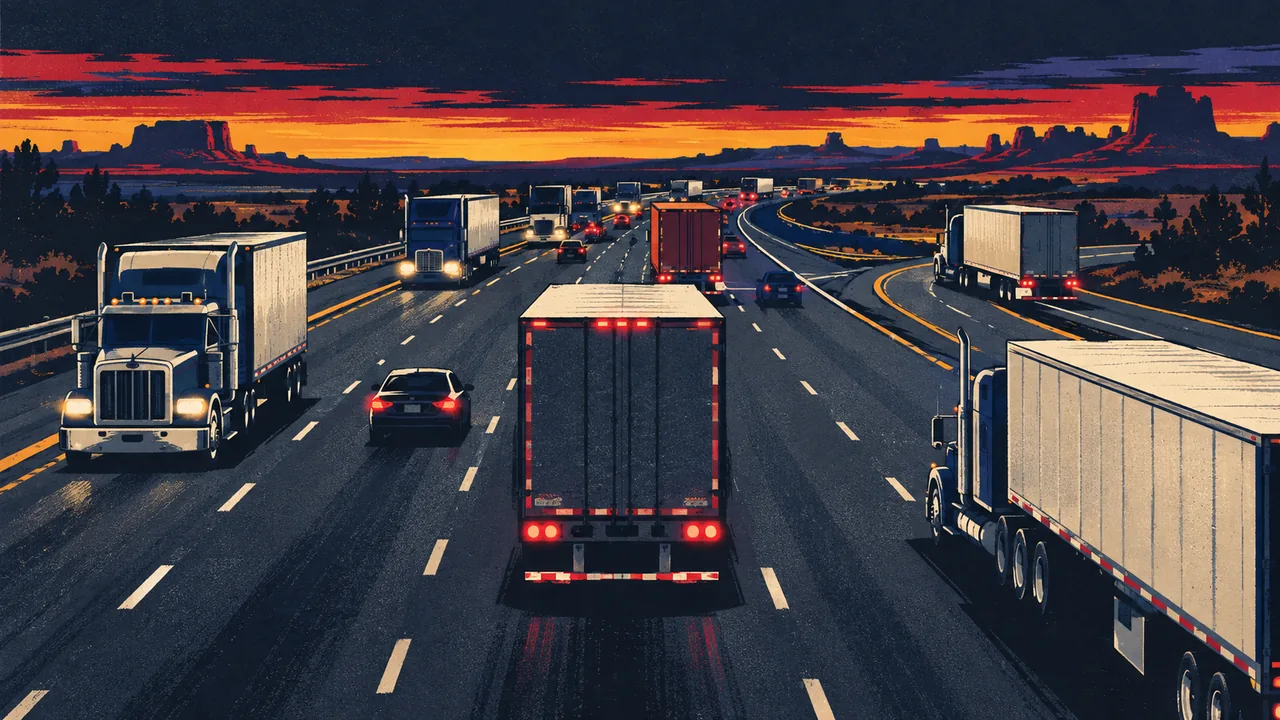
- Driver fatigue — running past hours-of-service limits and driving drowsy are still a leading factor in fatal large-truck crashes.
- Jackknife accidents — the trailer comes around past the cab and can sweep several lanes at once.
- Underride accidents — a car goes under the trailer. It's one of the deadliest crash types on the road.
- Rollover accidents — a high center of gravity plus too much speed in a curve can put a loaded trailer on its side.
- Blind spot (No-Zone) accidents — the rig has big blind spots on all four sides, and cars disappear in them during lane changes.
- Wide turn accidents — in the "squeeze play," a car gets pinned beside a trailer that's cutting the corner.
- Cargo shift & overloading — freight that wasn't tied down or balanced right moves, and the trailer goes with it.
- Impaired driving (DUI) — CDL holders are held to a stricter 0.04% BAC limit and face mandatory testing.
- Brake failure — skipped inspections and put-off repairs often lead straight back to carrier negligence.
- Tire blowouts — on an 80,000-pound rig, a worn, defective, or under-inflated tire can take away all control.
Why the cause of the crash matters legally
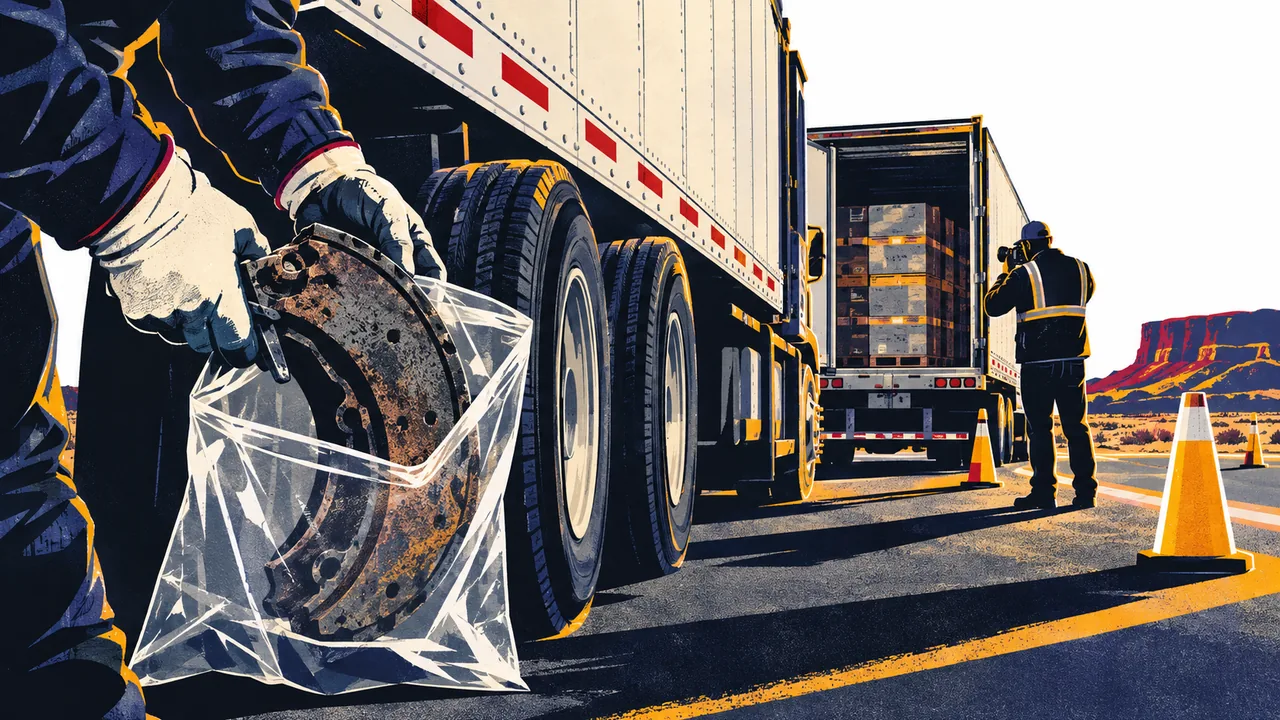
When two cars collide, the fight is usually over which driver wasn't paying attention. A trucking case is bigger than that. Figure out the cause and you find out which companies are on the hook and which records to go after:
| Cause | Likely liable parties | Key evidence |
|---|---|---|
| Driver fatigue | Driver, motor carrier | ELD/HOS logs, dispatch records |
| Jackknife | Driver, carrier, cargo loader | EDR data, load documentation |
| Underride | Driver, carrier, trailer manufacturer | Guard condition, conspicuity tape, lighting |
| Rollover | Driver, carrier, loader | EDR speed/steering data, load documents |
| Blind spot / No-Zone | Driver, carrier | Dashcam/trailer camera footage, mirror equipment records |
| Wide turn | Driver, carrier | Intersection camera footage, witness statements |
| Cargo shift | Loader, carrier, driver | Bill of lading, loading dock records |
| Impaired driving | Driver, carrier | Toxicology results, Clearinghouse records |
| Brake failure | Carrier, maintenance contractor | Inspection & maintenance records |
| Tire blowout | Carrier, tire manufacturer, maintenance shop | Tire remains, service history |
Here's the catch. The trucking company holds most of that evidence, and some of it can be lost or overwritten within weeks. That's why a serious case starts with a preservation (spoliation) letter, which an attorney sends right away. Learn more about FMCSA regulations and truck accident evidence, who can be held liable, and common truck accident injuries.