A cargo shift accident happens when an improperly secured or balanced load moves in transit, changing the trailer's center of gravity and causing a rollover, jackknife, or roadway spill. Federal rules set securement standards by cargo type, so a shifted load usually means the shipper, loader, or carrier missed one of them.
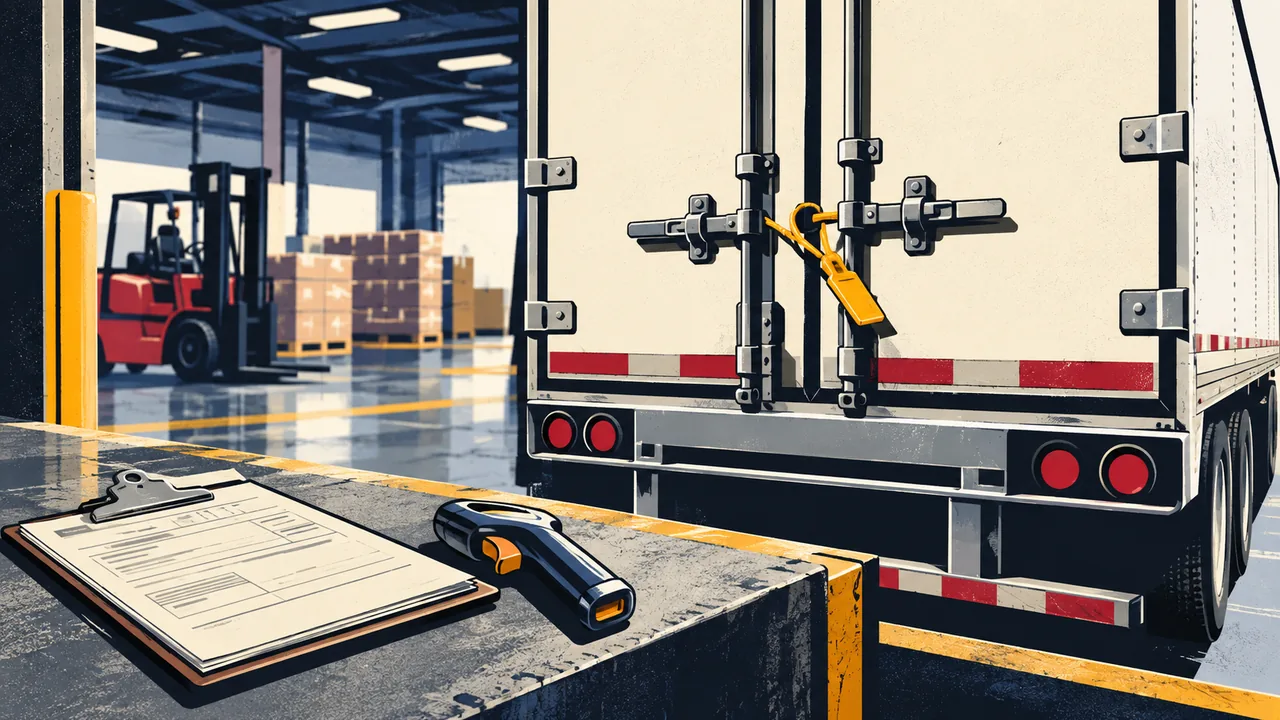
Look at the bottom of a lot of bills of lading and you'll find four words: "shipper load and count." Sometimes it's just "SLC" or "SL&C." It means the shipper loaded the trailer and counted the freight, and the driver didn't. Plenty of drivers back into a door, wait in the lot, get a sealed trailer and a stack of paper, and pull out without ever seeing what's behind the doors.
Then the load moves. Maybe it's pallets stacked two high that slide on the first hard stop, or a coil that wasn't chocked, or a heavy load bunched over the tandems. The driver feels the trailer shove or lean and has a second to react. For the car nearby, a cargo shift can mean a rollover, a jackknife, or freight (sometimes whole pallets or equipment) coming off an open deck into live traffic.
Federal cargo securement rules
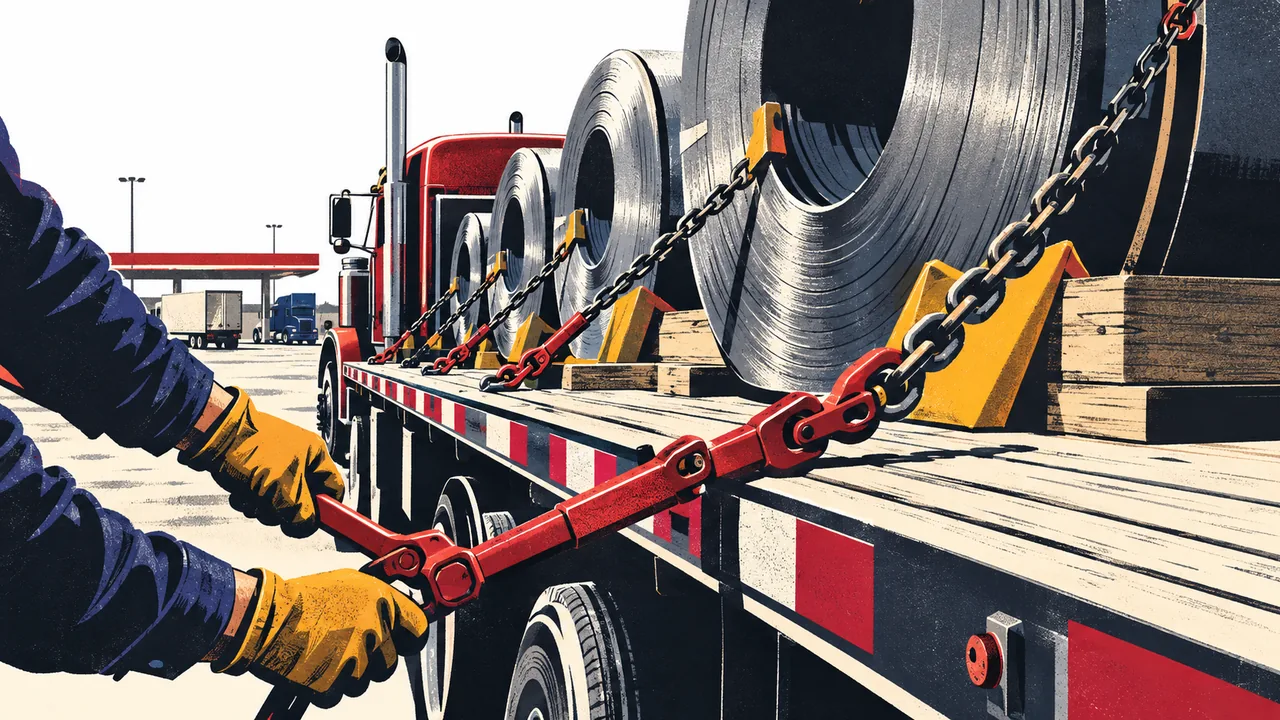
FMCSA cargo securement standards (49 CFR Part 393, Subpart I) require that cargo be:
- Secured against shifting, including sliding and tipping, under normal driving conditions
- Restrained by enough tiedowns rated for the cargo's weight
- Distributed so the load doesn't exceed axle weight limits or throw off handling
- Loaded within the trailer's and truck's rated capacity. Overloading is its own, separately regulated violation.
Drivers are required to inspect cargo securement before departure and periodically during a trip. On a flatbed that means walking the straps and chains. On a sealed box, it may mean the driver never had the chance. Violations show up in roadside inspection records and driver vehicle inspection reports.
Common cargo-related failures
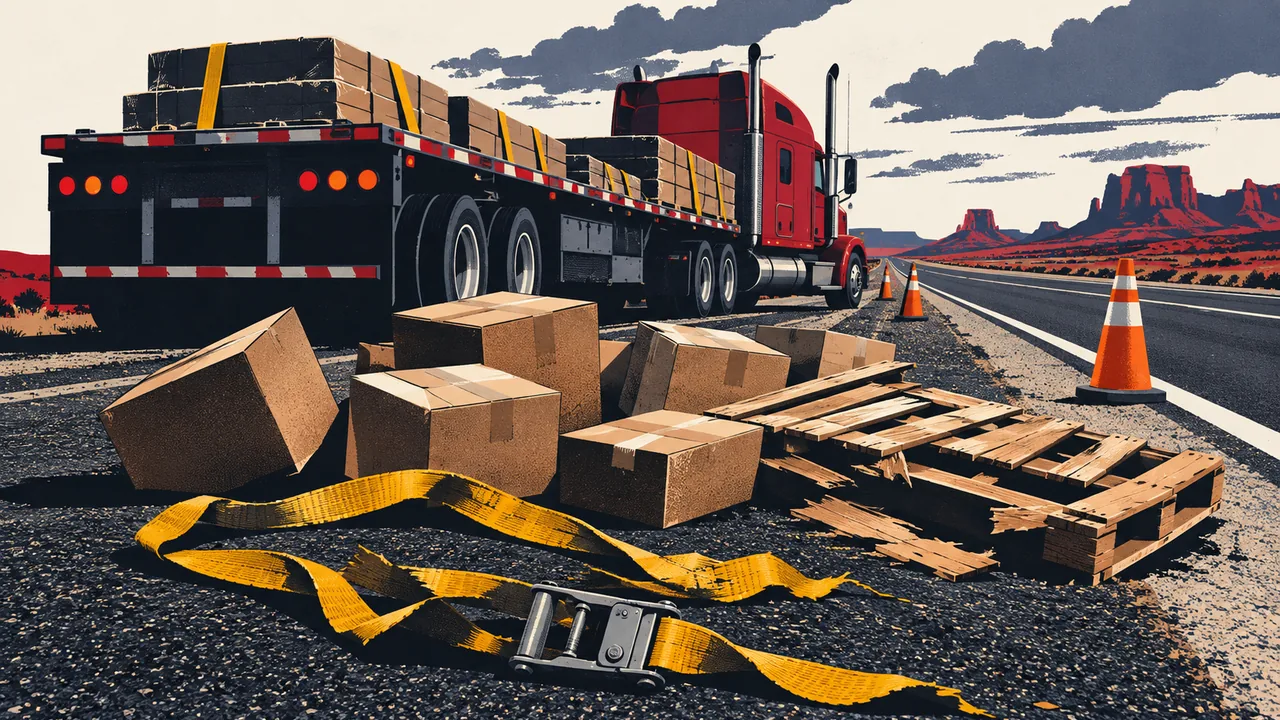
- Not enough tiedowns for the cargo's weight or shape
- Bad weight distribution, with too much toward the front or rear axle
- Liquid load surge in tankers without baffles, or driven too hard for a partial load
- Overloading past the trailer's or tires' rated capacity
- Loose or falling debris from open trailers or badly tarped loads
Who can be held liable?
- The cargo shipper or loader, often a separate company from the carrier, directly liable for negligent loading
- The trucking company, responsible for verifying securement before dispatch and en route
- The driver, required to inspect the load and refuse to drive an unsafe trailer
- A third-party logistics or freight brokerage, in some cases, for choosing an unqualified loader
The paper trail that shows who loaded it
Cargo cases are won on documents. The bill of lading shows who shipped the load and whether it was marked shipper load and count. Loading dock records show which door, which crew, and when. Scale tickets and weigh-station data show what the truck actually weighed and how it sat on each axle. Photos of the seal, and whether it was still intact after the crash, can matter a lot.
A big rig truck accident lawyer will pull that paper trail alongside the carrier's maintenance and dispatch records. See FMCSA regulations & evidence and who else can be held liable.
If you were driving vs. if you were hit
If you were the driver, hang on to your copy of the bill of lading, the seal number, and any scale ticket. Write down whether you were allowed to watch the loading or inspect the trailer, and who told you it was ready. Those details can point straight at the loader.
If you were in a car, photograph any cargo in the road before it's cleared, along with straps, chains, or tarps near it, and the company names on the tractor and trailer. Loose freight gets picked up fast, and the photos may be the only record of how it was tied down.
Related causes
Sources
- 49 CFR Part 393 Subpart I — Protection against shifting and falling cargo — Electronic Code of Federal Regulations
- Cargo Securement Rules — background and applicability — Federal Motor Carrier Safety Administration
- 49 CFR Part 396 — Inspection, repair, and maintenance — Electronic Code of Federal Regulations
- Large Truck and Bus Crash Facts — Federal Motor Carrier Safety Administration
- Safety Measurement System — carrier safety records by BASIC — FMCSA Safety Measurement System
Federal regulations and crash statistics are updated periodically. Figures cited on this page reflect the referenced publications at the time of writing; check the source for the current edition.