You're about to hand one person the biggest claim of your life, so interview them like it. Choose a big rig accident lawyer by specialty, not proximity: someone licensed in the state where the crash happened who handles commercial truck cases, has tried them, and will send a spoliation letter this week. Ask about truck case volume, trial record, who works the file, the contingency percentage, case costs on a loss and lien handling. The consultation is free, and these questions are the whole point of it.
Search "best big rig accident lawyer near me" and you get billboards and directories. This page is the checklist to use instead: what separates a truck accident attorney from a general injury lawyer, ten questions for the free call, what a good answer sounds like, red flags, and the one thing people keep getting wrong about what to tell their own lawyer.
What "best" means in a truck case
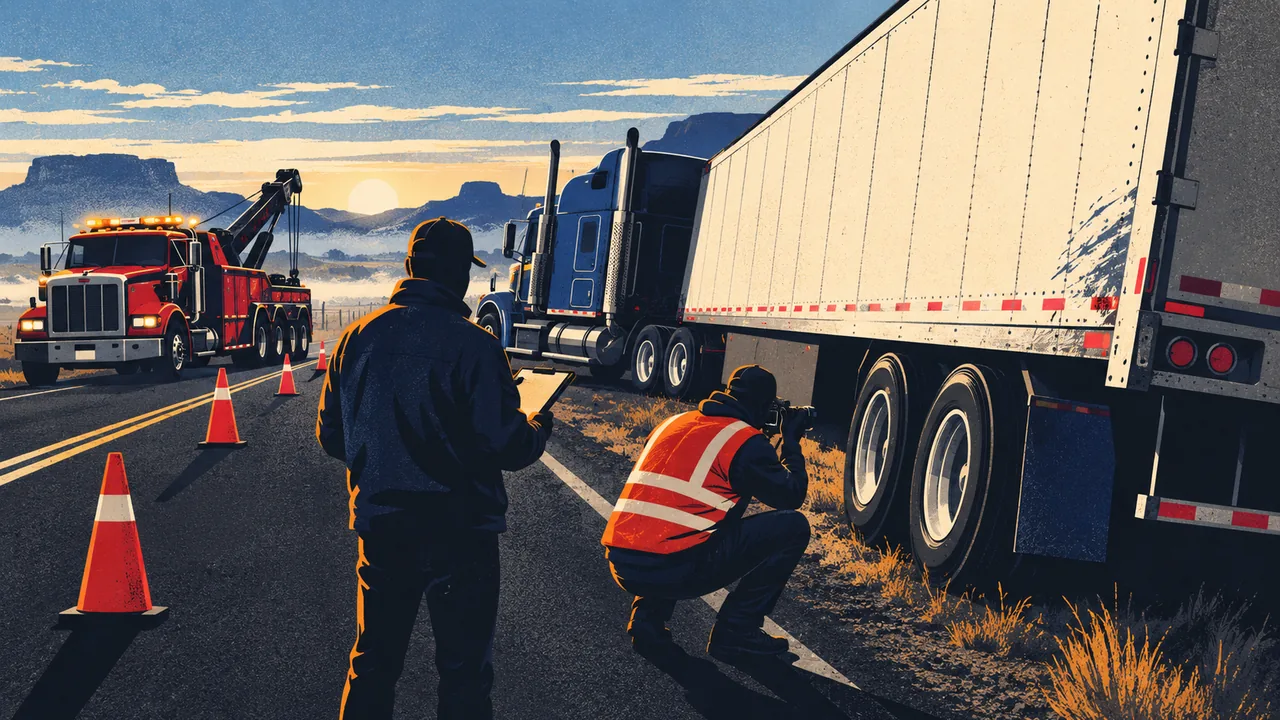
In a big rig case, you're up against corporations. A motor carrier and its insurer usually have investigators at the scene the same day. The evidence that decides the case is in their hands, not yours: the engine control module download, the electronic logging device records, dispatch messages, the driver qualification file and dash cam footage.
Much of that gets overwritten in normal operation within weeks unless someone formally demands it be kept. So the best lawyer comes down to three things, in this order:
- Licensed in the state with jurisdiction. Usually where the crash happened. That state's filing deadline and comparative fault rule govern the claim, not your home state's.
- A commercial truck practice. Regular work with FMCSA regulations, carrier discovery and multi-defendant liability: carrier, driver, trailer owner, broker, shipper, maintenance vendor.
- Trial credibility. Carriers know which firms never try cases, and the offer you get reflects it.
Geography comes last. Truck litigation is a practice specialty, not a neighborhood service. More on what "near me" actually means.
Truck specialist or car accident lawyer?
A good car accident lawyer can handle a fender-bender with a delivery van. A wreck with an 80,000-lb tractor-trailer is a different animal: a federal standard of care, corporate defendants, policies that start at $750,000 and often reach $5 million, and evidence that needs a preservation demand, an ECM download and expert reconstruction.
Here's a quick test. Ask the lawyer what a spoliation letter is and who should get one. If the answer isn't immediate, keep looking.
The 10 questions to ask

Each question below has an answer you'll recognize as good when you hear it. Ask them on the free consultation and write the answers down.
1. How many commercial truck cases have you handled in the last three years?
A good answer: A real number, plus the kinds of carriers involved: interstate freight, local delivery, hazmat. A truck practice is a practice, not a file that shows up now and then.
A warning sign: “We handle all kinds of accidents.”
2. How many of those went to trial, and what were the outcomes?
A good answer: Real trial experience, told straight, losses included. Carriers keep track of which firms settle everything and price their offers to match.
A warning sign: Only settlement figures with no context, or a refusal to discuss trials.
3. Will you send a spoliation letter this week, and to whom?
A good answer: Yes — to the carrier, its insurer, the trailer owner, and any broker or shipper identified from the police report and USDOT records, demanding preservation of ECM, ELD, dashcam, dispatch, and maintenance data.
A warning sign: Vagueness about what evidence exists or who holds it.
4. Who will actually work my case?
A good answer: A named attorney who handles truck cases, with a clear explanation of what paralegals and case managers do and how you reach the lawyer.
A warning sign: You never once talk to the attorney whose name is on the door.
5. What is the contingency percentage, and does it change if suit is filed?
A good answer: A stated number — commonly 33% pre-suit, often rising to 40% if litigation is required — put in writing in the fee agreement.
A warning sign: Reluctance to state the percentage, or a fee that is unusually high without explanation.
6. What happens to case costs if we lose?
A good answer: A direct answer. Many firms absorb costs on a loss; some bill them. Either can be acceptable, but it must be in the agreement.
A warning sign: “Don’t worry about that.”
7. Are you licensed in the state where the crash happened?
A good answer: Yes — or a clear plan: named local counsel and how the fee is shared, which should not increase your percentage.
A warning sign: An assumption that your home state's rules apply.
8. Which experts will you retain, and who pays for them?
A good answer: Accident reconstruction, a trucking safety expert on FMCSA standards, treating physicians, a life-care planner, and an economist for serious injuries — advanced by the firm.
A warning sign: No mention of experts, or an expectation that you fund them.
9. How will you handle my medical liens?
A good answer: A description of negotiating hospital, health-insurer, Medicare, and Medicaid liens down before disbursement — often the difference between a fair net recovery and a disappointing one.
A warning sign: Liens are never mentioned.
10. What do you need from me, and what should I stop doing?
A good answer: Keep treating, keep records, stay off social media, and refer every adjuster call to the firm.
A warning sign: No guidance at all.
Red flags

- Pushing you to sign a fee agreement on the first call, before you've asked a single question
- A promised or “guaranteed” settlement figure — no ethical attorney can guarantee an outcome
- No mention of evidence preservation in the first conversation
- A fee agreement that is not in writing, or that is silent on case costs and lien handling
- Solicitation at the hospital or by an unsolicited call — many states prohibit it, and it tells you something about the firm
- They can't name one commercial truck case they've taken to trial
What not to tell your attorney: nothing

People search this one a lot, and the answer is the opposite of what they expect. Tell your attorney everything: prior injuries to the same body part, previous claims, gaps in treatment, what you posted online, what you said to the adjuster on the phone. Attorney–client privilege protects the conversation.
The defense will find those facts in discovery anyway. Subpoenaing medical records and combing social media is routine for them. The fact itself rarely sinks a case. Your attorney getting surprised by it at a deposition can.
What you should not do is talk to the trucking company's insurer, give a recorded statement, or sign a release before you have counsel.
How the fee works, and what comes out of the settlement

Big rig accident lawyers work on contingency. Nothing upfront, and a percentage (commonly 33% to 40%) only if there's a recovery. Three things come out before you get paid: the fee, the case costs the firm advanced, and any medical liens.
Lien negotiation is where firms differ most, so ask about it directly. Settlement math, worked through →
Finding a big rig accident lawyer by state
Start with the state where the crash happened. It sets the deadline and the fault rule before any lawyer is even involved:
Is it worth it?

If you were hurt, yes. The consultation costs nothing, the fee depends on winning, and the other side already has lawyers. A free case review takes about a minute and sends your request to an attorney licensed in the right state. That's the first filter on this page, applied for you.
Related guides
- Big rig accident lawyer — the hub
- 28 answers about big rig accident claims
- What happens in a truck accident lawsuit
- What your claim may cover
Sources
- SAFER Company Snapshot — carrier safety records — Federal Motor Carrier Safety Administration
- Model Rules of Professional Conduct, Rule 1.5 — Fees — American Bar Association
- 49 CFR § 387.9 — Financial responsibility, minimum levels — Electronic Code of Federal Regulations
- 49 CFR § 395.8 — Driver's record of duty status — Electronic Code of Federal Regulations
Federal regulations and crash statistics are updated periodically. Figures cited on this page reflect the referenced publications at the time of writing; check the source for the current edition.