California gives you 2 years to file most truck accident claims, and it follows pure comparative negligence. Federal FMCSA rules govern the trucking company; California law governs your injury claim.
Most big rig wrecks in California don't happen on some lonely desert highway. They happen in stop-and-go traffic between the ports and the warehouses, where a loaded container chassis and a sedan end up in the same lane. A California truck accident lawyer has to understand that drayage world to build your case.
Sharing the blame in California
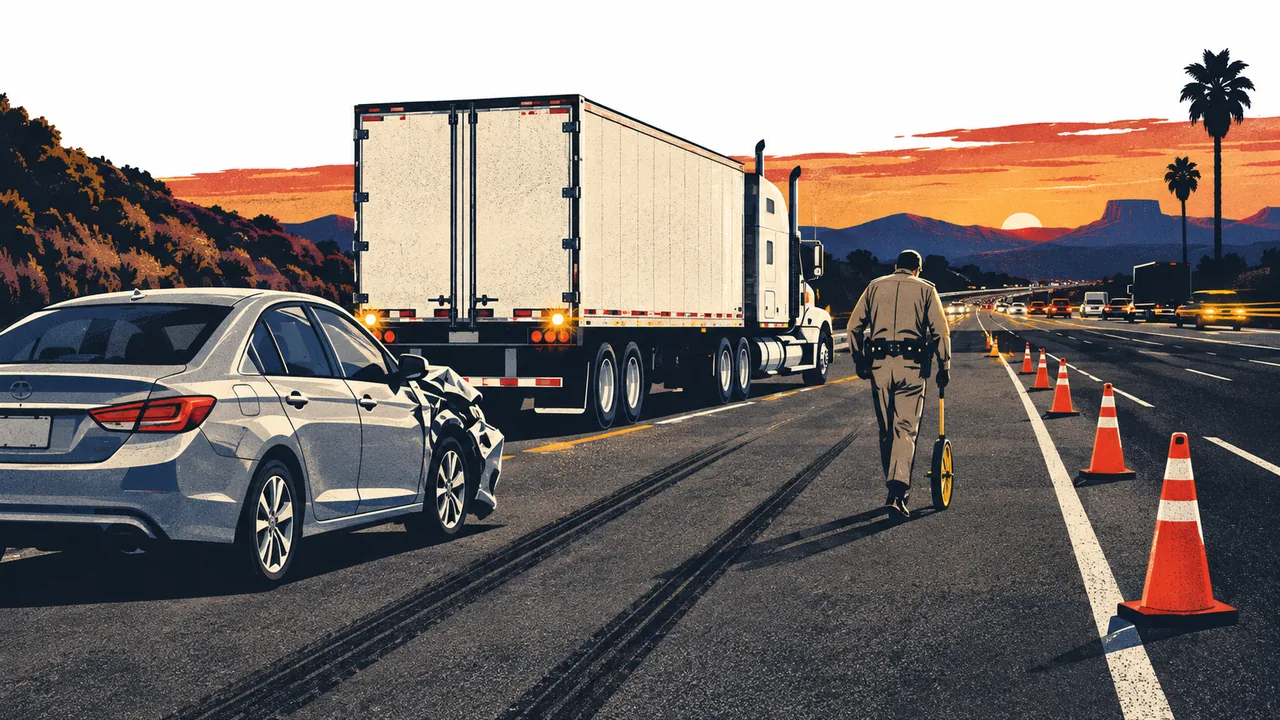
California is a pure comparative state. Even a claimant found 90% at fault may recover the remaining 10% of their damages — there is no percentage that bars recovery outright.
Also see who can be held liable.
Port drayage, Inland Empire warehouses and the Grapevine
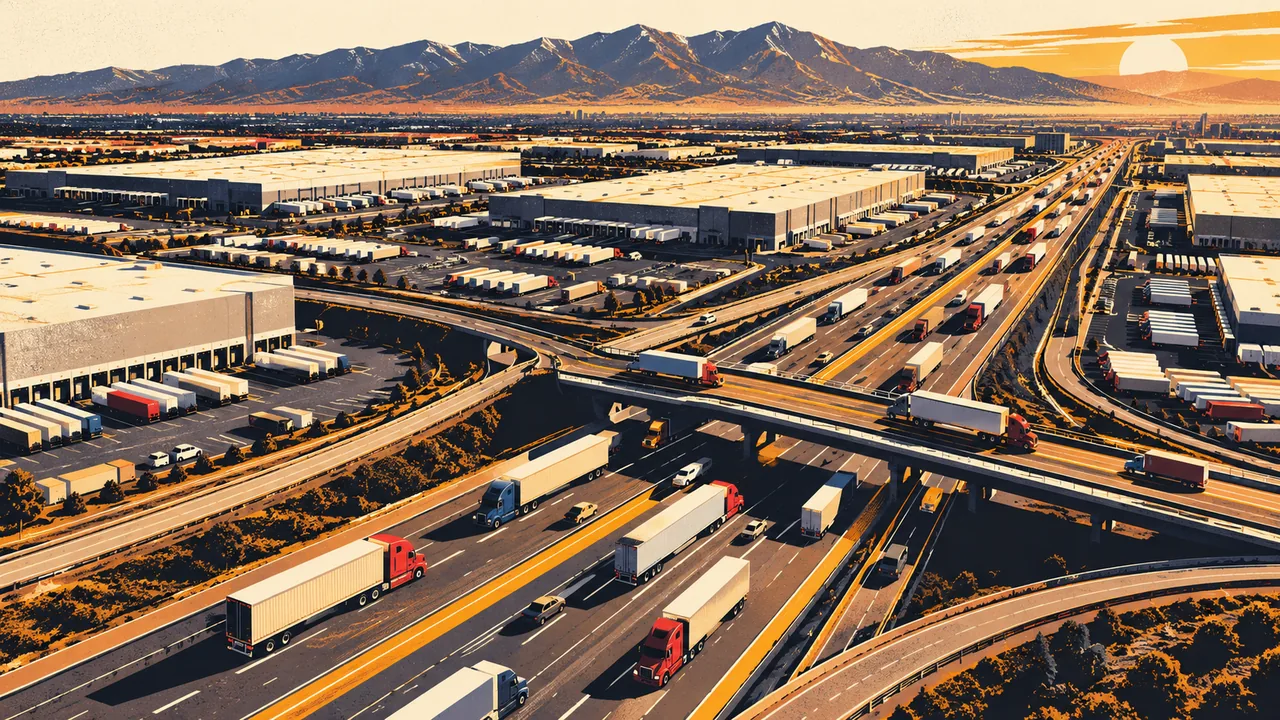
Picture I-710 at 6 a.m. Day-cab tractors pull boxes out of Long Beach and Los Angeles, headed for the rail yards or out to Fontana and Ontario. A lot of those drivers are paid by the load, so every hour stuck in traffic costs them money, and some push harder than they should.
Farther north, SR-99 runs through Fresno and the Central Valley with produce trucks and reefers running tight delivery windows. On I-5 the Grapevine grade takes brakes to their limit going down, and Tule fog in winter can drop visibility to almost nothing in seconds.
The Ports of Los Angeles and Long Beach move a substantial share of all containerized imports into the United States, and the drayage traffic feeding out of them concentrates heavy truck volume across the Inland Empire — San Bernardino, Riverside, Fontana, Ontario, and Rancho Cucamonga — where warehouse and distribution density is among the highest in the country.
- I-5 (the state's north–south freight spine)
- I-10 and I-15 through the Inland Empire
- SR-99 through the Central Valley
- I-710 (the Long Beach drayage corridor)
- I-40 and I-80 for interstate long-haul
If you drive drayage or long-haul out of California
Port drivers get hurt too, often by another rig or by a chassis that was never properly inspected before it left the terminal. If that's you, photograph the chassis number and the damage, and keep your gate tickets. Those little slips show where the equipment came from and who was supposed to check it.
When a semi hits your car on the 10, the 15 or the 99
If your family was in the car, the CHP collision report is usually the first real document you'll see. Request it early. Ask neighbors or nearby businesses about dash cam or security video right away, because a lot of that footage gets recorded over in days.
What's different about California claims

Before you talk to an adjuster
- California does not cap compensatory damages in ordinary personal injury cases.
- Claims against a California public entity require a government claim, generally within six months of the incident under the Government Claims Act.
- The California Highway Patrol handles most freeway collision investigations; the traffic collision report is a core early document.
The federal layer
An interstate carrier in California answers to the same federal floor as everywhere else: at least $750,000 in liability coverage, hours-of-service limits under 49 CFR Part 395, and a six-month retention floor on driver duty records. Read about preserving the truck's data and the federal safety regulations.
Finding a lawyer in California

Ask whether the lawyer has handled cases involving port equipment or motor carriers that lease on independent drivers. Figuring out who actually employed the driver is often the whole fight.
Network attorneys cover Los Angeles, San Bernardino, Rancho Cucamonga, Riverside, Fresno, Sacramento, Oakland, and San Diego. Start a free case review.
Other states
See all states → or check filing deadlines for all 50 states.
Sources
- Large Truck and Bus Crash Facts — Federal Motor Carrier Safety Administration
- SAFER Company Snapshot — carrier safety records — Federal Motor Carrier Safety Administration
- Fatality Analysis Reporting System (FARS) — National Highway Traffic Safety Administration
Federal regulations and crash statistics are updated periodically. Figures cited on this page reflect the referenced publications at the time of writing; check the source for the current edition.