A truck crash in Sacramento is a California claim: 2 years to file in most cases and pure comparative negligence. Big Rig Lawyer connects people hurt here with attorneys licensed in California; we are a referral service, not a local law office.
Tule fog was sitting on the causeway, or it was harvest season and a tomato trailer swung wide on a county road. Sacramento crashes often start with a condition you couldn't see coming.
Driving Sacramento: what the roads are really like
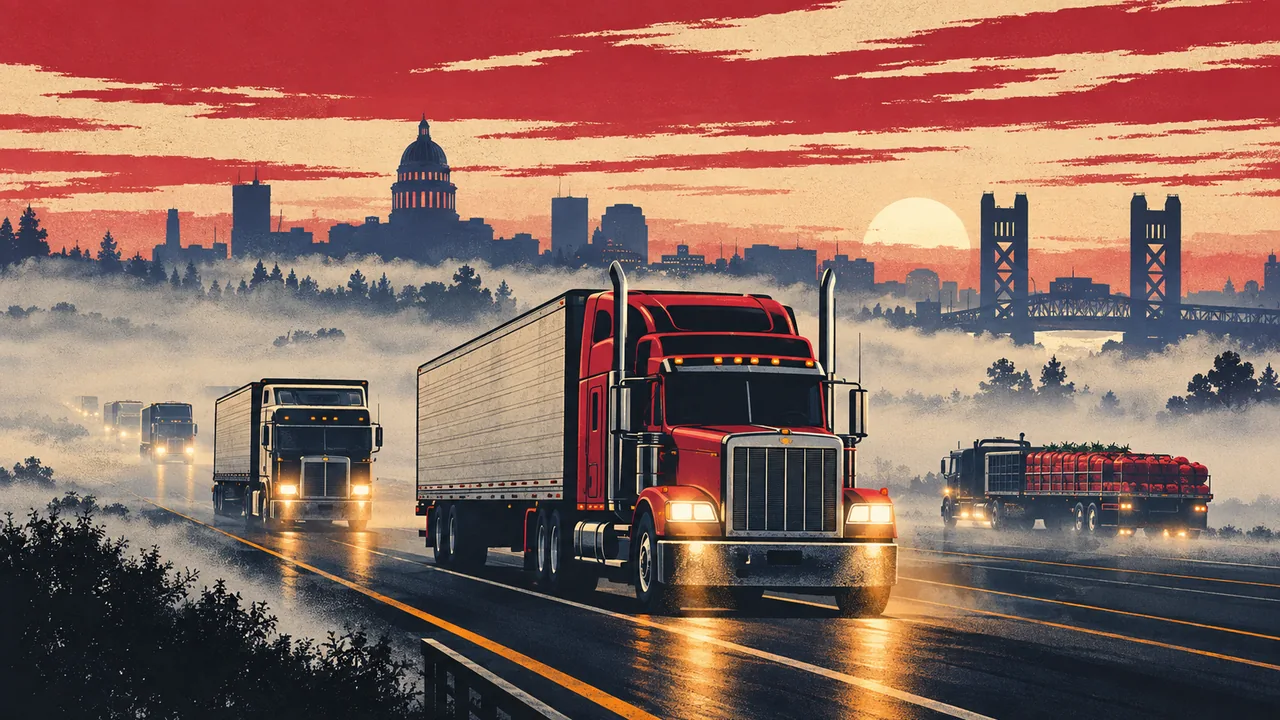
Tule fog is the Sacramento Valley's winter hazard. It forms low and thick, often in the early morning, and can drop visibility to a few car lengths. When it settles on I-5 or the Yolo Causeway, chain-reaction crashes involving several trucks can happen in seconds.
The rest of the year, it's congestion and harvest traffic. Downtown interchanges back up during rush hour, and in late summer, open tomato trailers and farm trucks crowd the rural roads and I-5. Heading east, I-80 climbs into the Sierra, where winter snow brings chain controls and trucks running slow in the right lane.
Where big rig wrecks cluster in Sacramento
- I-80 Yolo Causeway. A long elevated stretch over the bypass where fog, wind and sudden slowdowns leave no room to escape.
- I-5 / I-80 interchange near Natomas. North-south and east-west freight corridors cross near the airport and warehouse districts.
- Business 80 / US-50 / I-5 interchanges downtown. Aging interchanges with lane drops and short merges close to the Capitol.
- I-80 east through Roseville toward the Sierra. Heavy truck volume climbing toward Donner Summit, with chain controls in winter.
The freight behind Sacramento truck traffic
Sacramento sits where I-5 and I-80 cross, so freight from Oregon, Southern California and the Bay Area all runs through. Union Pacific's big rail yard in Roseville classifies freight trains around the clock. The Port of West Sacramento handles bulk cargo, and warehouses cluster around Natomas, the airport and McClellan Park. Farm freight is huge too: rice, tomatoes, almonds and dairy from the Central Valley move in heavy seasonal surges.
Main truck routes: I-5 · I-80 · Business 80 (Capital City Freeway) · US-50 · SR-99.
If you were driving the truck
If you run produce or ag freight, your loads are time-sensitive, and the pressure to deliver can be heavy. Save your dispatch messages, ELD records and any delivery windows you were given. If a crash happened in fog, note whether any warnings were posted or if CHP was pacing traffic. Drivers heading over the Sierra should keep records of chain-control notices. Get checked by a doctor right away, and talk with an attorney before giving a statement to the company's insurer.
If a big rig hit your car
If a truck hit your car in fog on the causeway or I-5, there may have been multiple vehicles involved. Photograph every truck you can, their cab doors and trailer numbers. Note what visibility was like, and whether hazard lights or warnings were visible. Keep your medical records, and if your kids were in the car, have them checked even if they seem fine.
Local moves that protect a Sacramento claim
- The California Highway Patrol usually handles crashes on freeways, even inside city limits. On city streets, it's typically Sacramento police or the police of cities like Elk Grove, Roseville or West Sacramento. In unincorporated areas, it's the county sheriff. Get the agency name and report number at the scene.
- Caltrans and CHP post fog advisories for Valley highways. Save any alert you received that day.
- Harvest trucks often carry farm or cannery names on the trailer. Photograph those markings.
- If a crash happened on I-80 toward the Sierra, note any chain-control status. It helps show conditions at the time.
California rules still decide the case
California is a pure comparative state. Even a claimant found 90% at fault may recover the remaining 10% of their damages — there is no percentage that bars recovery outright.
Read the full California truck accident guide and the California filing deadlines, or start a free case review.
Other California metros
Sources
- Large Truck and Bus Crash Facts — Federal Motor Carrier Safety Administration
- SAFER Company Snapshot — carrier safety records — Federal Motor Carrier Safety Administration
Federal regulations and crash statistics are updated periodically. Figures cited on this page reflect the referenced publications at the time of writing; check the source for the current edition.