Truck tire blowouts are usually maintenance failures, not bad luck. Federal rules set minimum tread depth (4/32 inch on steering axles, 2/32 elsewhere) and bar worn, damaged, or underrated tires. Liability normally rests with the motor carrier, and sometimes a service shop, retreader, or tire manufacturer.
Drivers who've had a steer tire go say the same thing: first the bang, loud as a gunshot under the cab. Then the wheel jerks in your hands and the whole tractor pulls hard toward the blown side. Blow the right steer and you're headed for the shoulder. Blow the left and you're headed across the line into oncoming traffic or the median. You've got maybe a second to hold it straight and stay off the brakes.
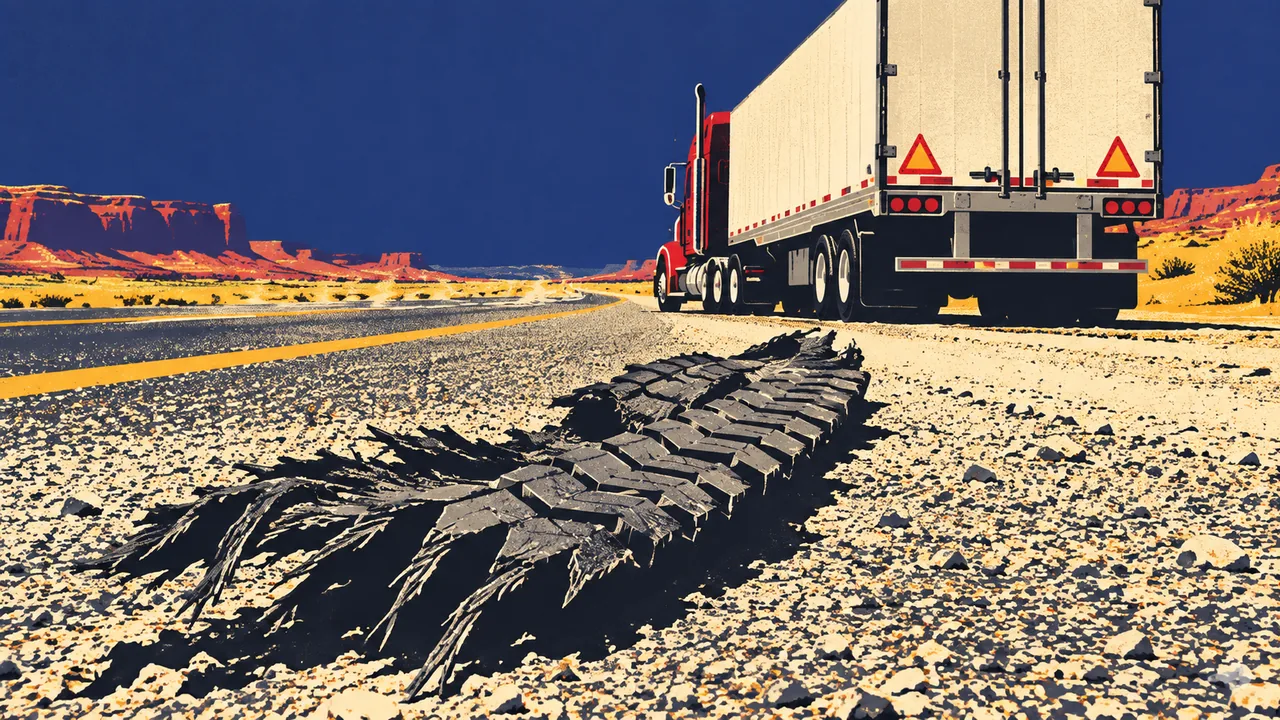
You've seen the leftovers on every interstate: shredded strips of tread, "road gators," lying on the shoulder. Each one is a commercial tire that came apart at speed. When a drive or trailer tire fails, the tread itself can come flying back and punch through a windshield. For the car behind or beside the truck, that debris can cause the crash all by itself. Blowouts also feed into rollovers, lane-departure crashes, and jackknife accidents.
What causes commercial tire blowouts?
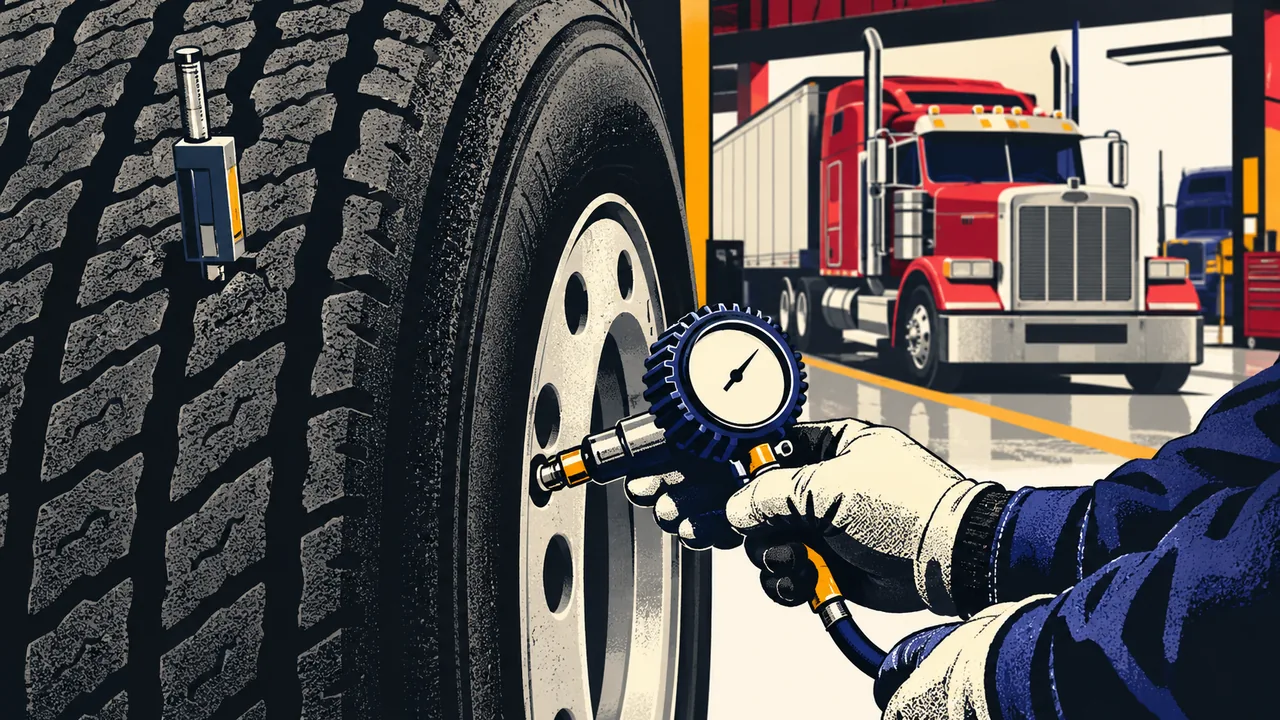
- Under-inflation, the leading cause. A low tire flexes, overheats, and delaminates. Pressure checks are part of the required pre-trip inspection, and a tire thumper isn't a gauge.
- Tread worn past legal limits. FMCSA regulations set minimum tread depths (4/32" on steer tires, 2/32" elsewhere). Running below those limits is a violation, not bad luck.
- Overloading. Cargo beyond a tire's load rating builds heat and stress. Weigh station and bill-of-lading records expose it.
- Retread failures. Retreads are legal and common, but bad retreading work can cause the tread to separate.
- Manufacturing defects, which can support a product liability claim against the tire maker.
- Road hazards on top of worn casings. A healthy tire survives a pothole or a chunk of debris that a neglected one won't.
Blowouts are treated as maintenance failures
Like brake failure, a commercial tire blowout usually traces back to skipped inspections or a replacement that kept getting put off. Carriers have to document tire condition in driver vehicle inspection reports and maintenance files. When those records show a slow leak written up and ignored, or tires already under the limit at the last inspection, the "unavoidable accident" defense falls apart.
The service history is where this shows up: shop invoices, tire rotation and replacement logs, and the DOT date code on the sidewall that tells you how old the tire was. It's also worth checking whether that tire model was under a manufacturer recall.
Who can be held liable?
- The trucking company, for negligent maintenance and inspection practices
- The driver, for skipped pre-trip pressure and tread checks
- The tire or retread manufacturer, for defective products
- A service shop, for improper installation or repair
- The shipper or loader, for overloading the vehicle
Save the tire
The failed tire is the case. Forensic tire experts can tell a defect from neglect from a road hazard by looking at the remains: how the tread separated, the wear pattern, heat damage inside the casing. An attorney moves quickly to secure it before a wrecker or shop throws it out.
If you were driving the truck, tell whoever tows it that the tire and every piece of it need to be kept, and write down your last pressure check and any tire problems you reported to the shop or dispatch. If you were in a car, take photos of the blown tire and any tread in the road before it's swept up, plus the truck's DOT number.
Learn what to do after a truck accident and who can be sued, or get a free case review from a big rig accident attorney now.
Sources
- 49 CFR § 393.75 — Tires — Electronic Code of Federal Regulations
- 49 CFR Part 396 — Inspection, repair, and maintenance — Electronic Code of Federal Regulations
- Recalls, defect investigations, and safety issues — National Highway Traffic Safety Administration
- Safety Measurement System — carrier safety records by BASIC — FMCSA Safety Measurement System
- Large Truck and Bus Crash Facts — Federal Motor Carrier Safety Administration
- Company Safety Profile / SAFER carrier snapshot — FMCSA SAFER System
Federal regulations and crash statistics are updated periodically. Figures cited on this page reflect the referenced publications at the time of writing; check the source for the current edition.