A No-Zone is one of the four blind spots around a big rig: front, rear, left, and right. The right side is the biggest and covers more than one lane. A car inside one can't be seen from the driver's seat. Liability usually falls on the driver for changing lanes without clearing the mirrors, and on the carrier for weak No-Zone training.
Picture it from the cab. You're running 60 in the center lane, you flip on the right signal, and you check the passenger-side mirror. Empty. You check the convex below it. Nothing. What you can't see is the sedan sitting off your trailer tandems on the passenger side, riding right where no mirror shows it. That's how most truck blind spot accidents start, and it's why the federal government gave these areas a name.
The Federal Motor Carrier Safety Administration calls a big rig's blind spots "No-Zones." They sit along the front, the rear, and both sides of the trailer, and the driver has little or no view of other vehicles inside them. They're much bigger than a car's blind spots. They run roughly one lane wide down both sides for the length of the trailer, up to 20 feet in front of the cab, and 30 feet behind the trailer.
From the car, it looks different. You're holding steady beside the trailer, maybe waiting for a gap to pass, and the trailer starts drifting into your lane with no warning. By the time you hit the horn, the landing gear or the rear tires are already in your door.
How No-Zone accidents happen
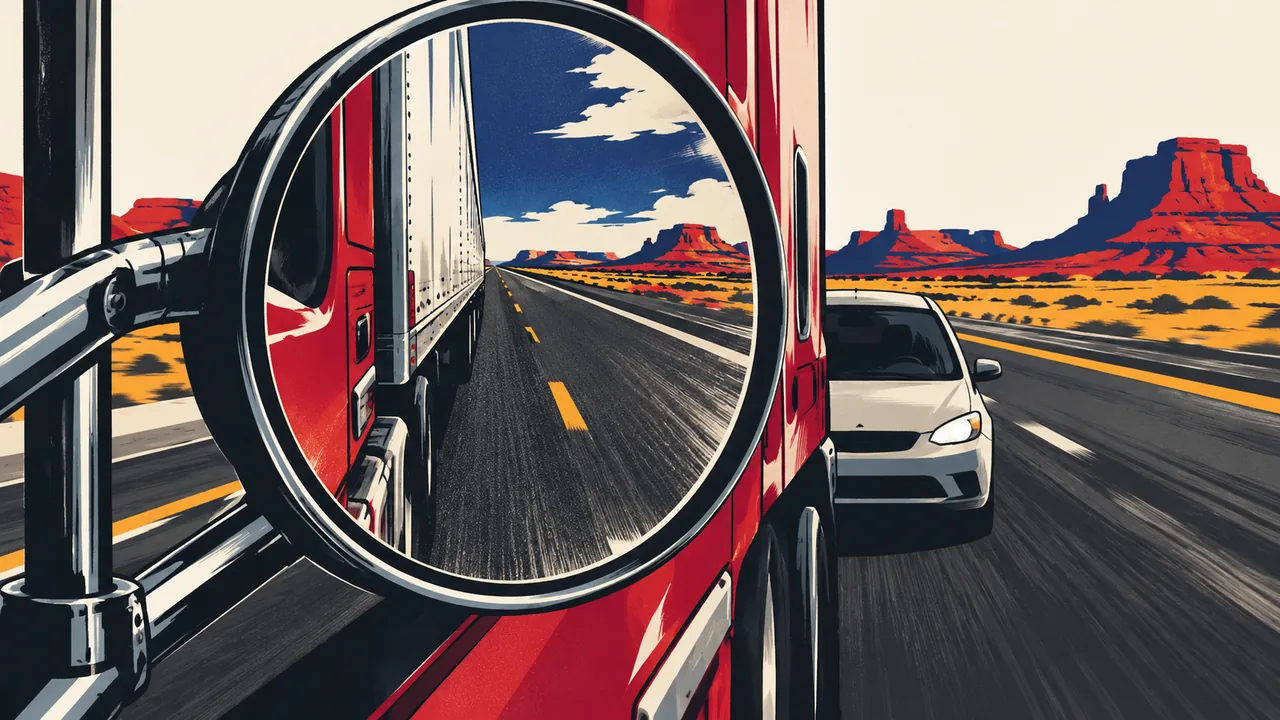
- Right-side lane changes. The right side of a tractor-trailer has the biggest blind spot. It runs from the cab door back past the trailer's rear wheels. Drivers who move right without good mirror checks or a spotter often sideswipe a car they never saw.
- Merging onto highways. When a truck merges, a car hanging in its No-Zone can't be seen by the driver, even when the mirrors are used the right way.
- Backing and rear No-Zone crashes. The space right behind a trailer is a total blind spot. Backing wrecks at truck stops, loading docks, and parking lots happen all the time.
- Front No-Zone braking. The driver sits high and the front bumper sits well ahead of the cab. So a truck can hit a car that cut in close and then had to brake.
Who is liable?
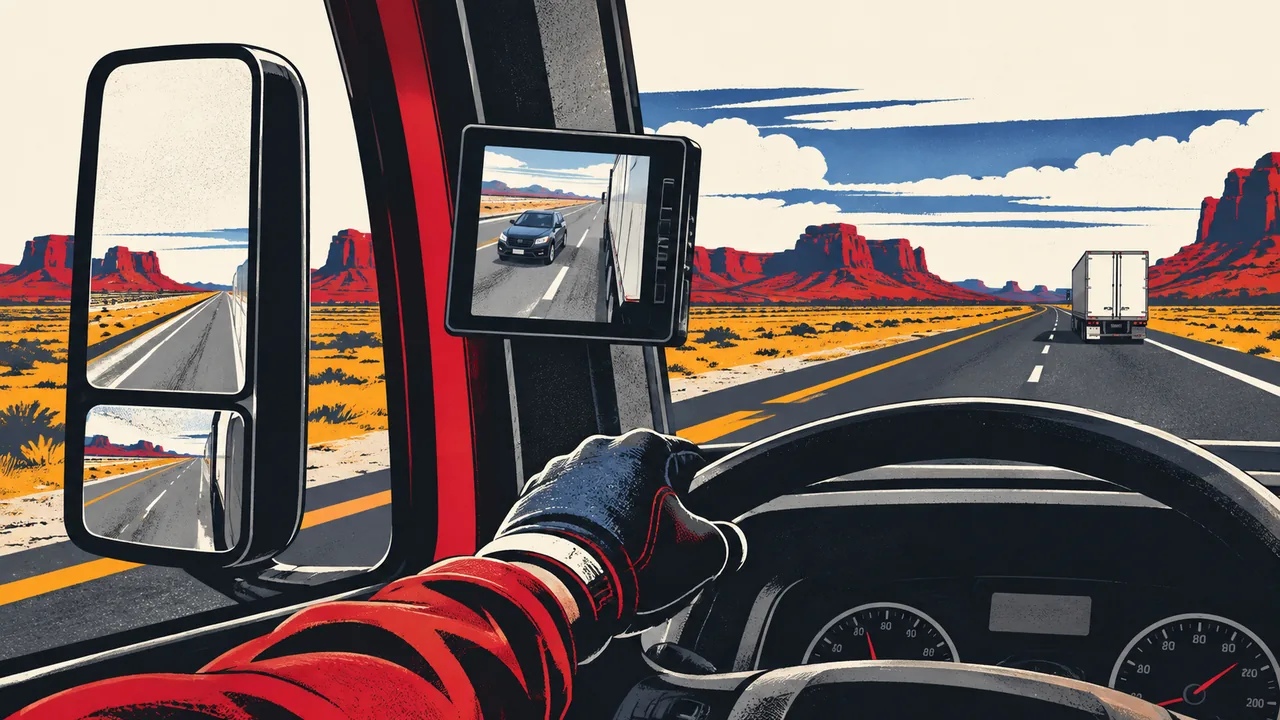
Federal and state law require commercial drivers to be trained on No-Zone awareness, how to check mirrors, and when to signal before a lane change. A blind-spot wreck usually points back to one or more of these:
- The driver: didn't check mirrors, didn't signal, or didn't use the spotter or camera systems on hand before merging
- The trucking company: weak No-Zone training, or didn't equip trailers with required convex mirrors and, more and more often, side cameras
- A third party: comparative fault can apply if another driver lingered in a No-Zone when they shouldn't have, but insurers routinely overstate this to shift blame off the truck
The evidence that decides a lane-change crash
These cases usually come down to three questions. Could the driver have seen the car? Did the signal come on before the truck moved, or after? And were the mirrors set up to do their job? The proof for all three is on the truck or near the road, and most of it doesn't last long.
- Dash cam and side cameras. Many fleets run forward and side-facing cameras, and some tractors carry blind-spot cameras or proximity sensors. That video can show exactly where the car was when the truck started moving.
- Mirror equipment. How the mirrors were mounted, aimed, and whether any were cracked or knocked loose. Photograph them at the scene if you can. Once the truck goes to the shop, that evidence is gone.
- Lane-change signaling. The electronic control module records steering and speed input. Put that next to camera footage and you can see whether the blinker came on before the trailer crossed the line.
Dash cam and trailer-mounted camera footage, if it exists, often decides these cases and should be requested right away. Footage can be recorded over within days.
If you were the one hurt
If you were in the car, write down what you remember about the truck's signal and where you were sitting relative to the trailer, while it's fresh. Get the carrier name and USDOT number off the cab door. Don't agree with an adjuster that you were "in the blind spot" as if that settles it. It doesn't.
If you were driving the truck and got hurt when another rig or a car moved into you, the same evidence applies to your claim. Ask your company not to overwrite your own dash cam video, and keep your own notes on how your mirrors were set that day.
Learn what to do after a truck accident and who else may share liability, or get a free case review from a big rig truck accident lawyer.
Related causes
Sources
- Our Roads, Our Safety — large truck blind spots (No-Zones) — Federal Motor Carrier Safety Administration
- 49 CFR § 393.80 — Rear-vision mirrors — Electronic Code of Federal Regulations
- 49 CFR Part 391 — Qualifications of drivers — Electronic Code of Federal Regulations
- Large Truck and Bus Crash Facts — Federal Motor Carrier Safety Administration
- Large Trucks — fatality facts and crash research — Insurance Institute for Highway Safety (IIHS)
- Safety Measurement System — carrier safety records by BASIC — FMCSA Safety Measurement System
Federal regulations and crash statistics are updated periodically. Figures cited on this page reflect the referenced publications at the time of writing; check the source for the current edition.