Truck driver fatigue statistics start with one federal survey: 24% of long-haul truck drivers reported at least one near-miss crash in the previous 7 days, per the NIOSH National Survey of Long-Haul Truck Drivers. 73% said their delivery schedules were unrealistically tight, and 24% kept driving despite fatigue to meet those schedules. Those are still the federal baseline for how much crash risk trucker fatigue puts on the road.

Anybody who’s run hard to make a delivery window knows what the numbers say before reading them. The federal record comes from the NIOSH National Survey of Long-Haul Truck Drivers: 1,265 drivers interviewed at truck stops across the country. The findings are buried in a dense government report most people never open.
Here we pull out the numbers that matter to a driver, a family, an adjuster, or a jury, and show how they tie to the paper trail an attorney uses to prove fatigue in one specific crash.
If a tired driver may be behind your crash, the clock on the evidence is already running. See how a big rig truck accident lawyer preserves it, or start with a free case review.
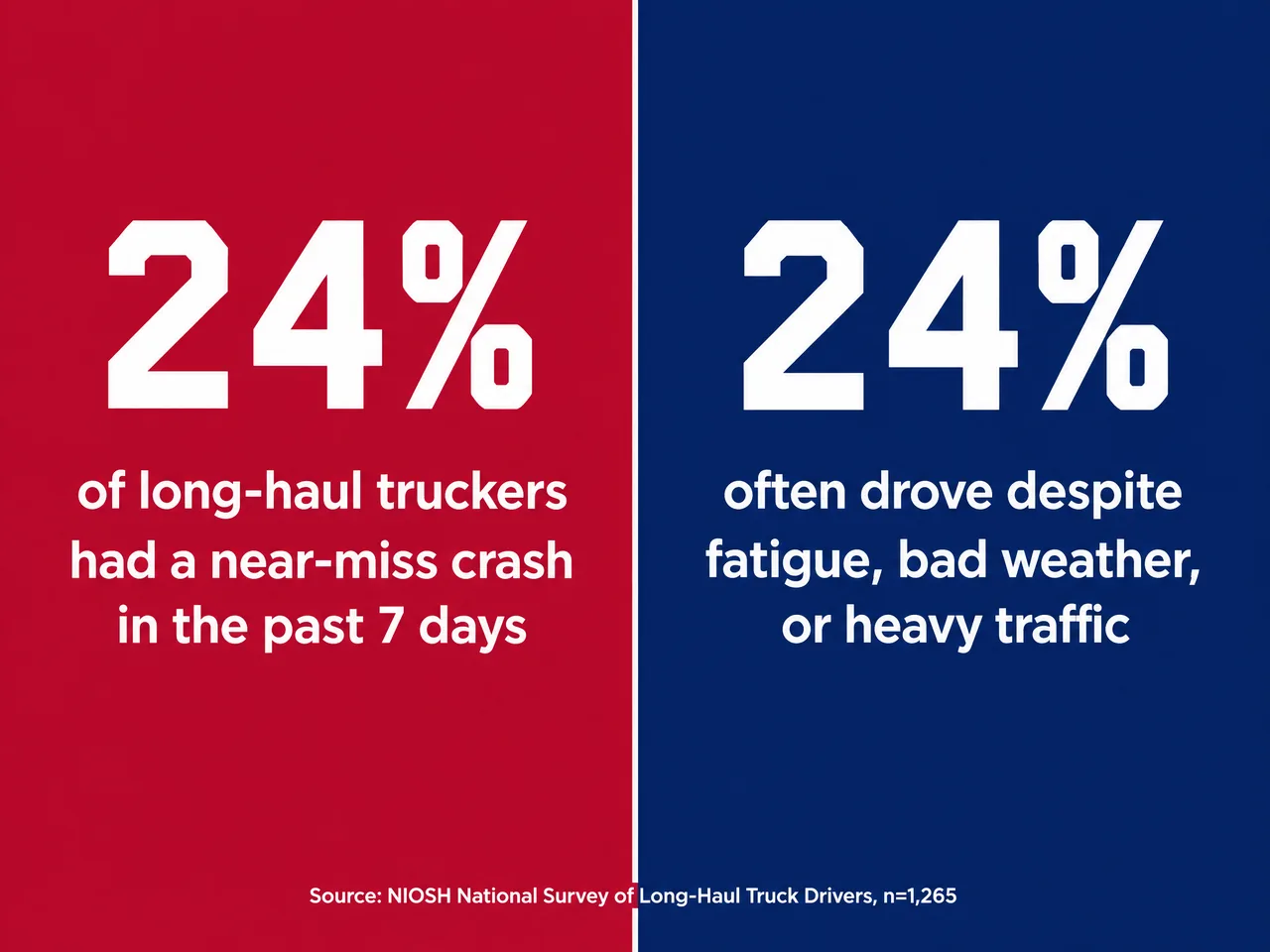
The headline number: 24% of drivers had a near-miss in the past 7 days
NIOSH asked long-haul drivers a simple question: in the past seven days, did you almost have a crash you narrowly avoided? 24% said yes. That’s not once in a career, or once this year. That’s last week.
A near-miss is a wreck that didn’t happen by a second or a few feet. When nearly one driver in four reports one in a single week, you’re not looking at a few bad drivers. You’re looking at how the work is set up.
The seven NIOSH findings, ranked by prevalence
Every number below comes straight from the NIOSH National Survey of Long-Haul Truck Drivers, via the government publication and the peer-reviewed Sieber et al. paper. Nothing is pulled from secondhand roundups.
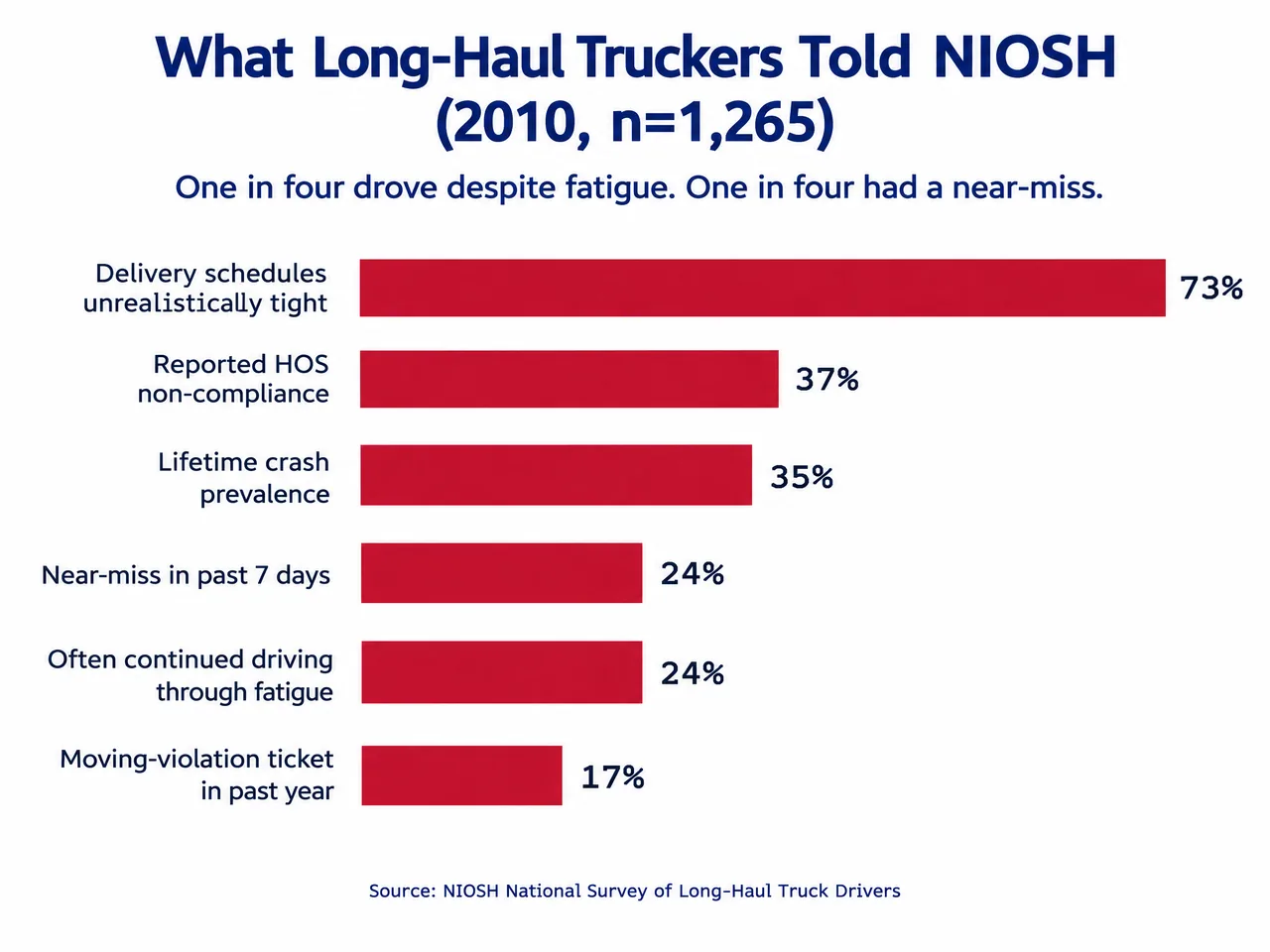
| Finding | Share of drivers |
|---|---|
| Delivery schedules were unrealistically tight (often + sometimes) | 73% |
| Reported hours-of-service non-compliance in the past year | 37% |
| Had at least one crash during their trucking career | 35% |
| Had at least one near-miss in the past 7 days | 24% |
| Continued driving despite fatigue, bad weather, or heavy traffic | 24% |
| Received a moving-violation ticket in the past year | 17% |
| Felt management did not prioritize worker safety | 15% |
Two smaller numbers from the same survey are worth keeping in mind: 4.5% often drove 10+ mph over the speed limit, and 6% never wore a seatbelt. Also inside the same dataset: 68% of non-crash injuries among company drivers were not reported to the employer. So the survey picks up things a payroll or workers’-comp file never will.
Why the numbers matter: schedules drive fatigue drives violations
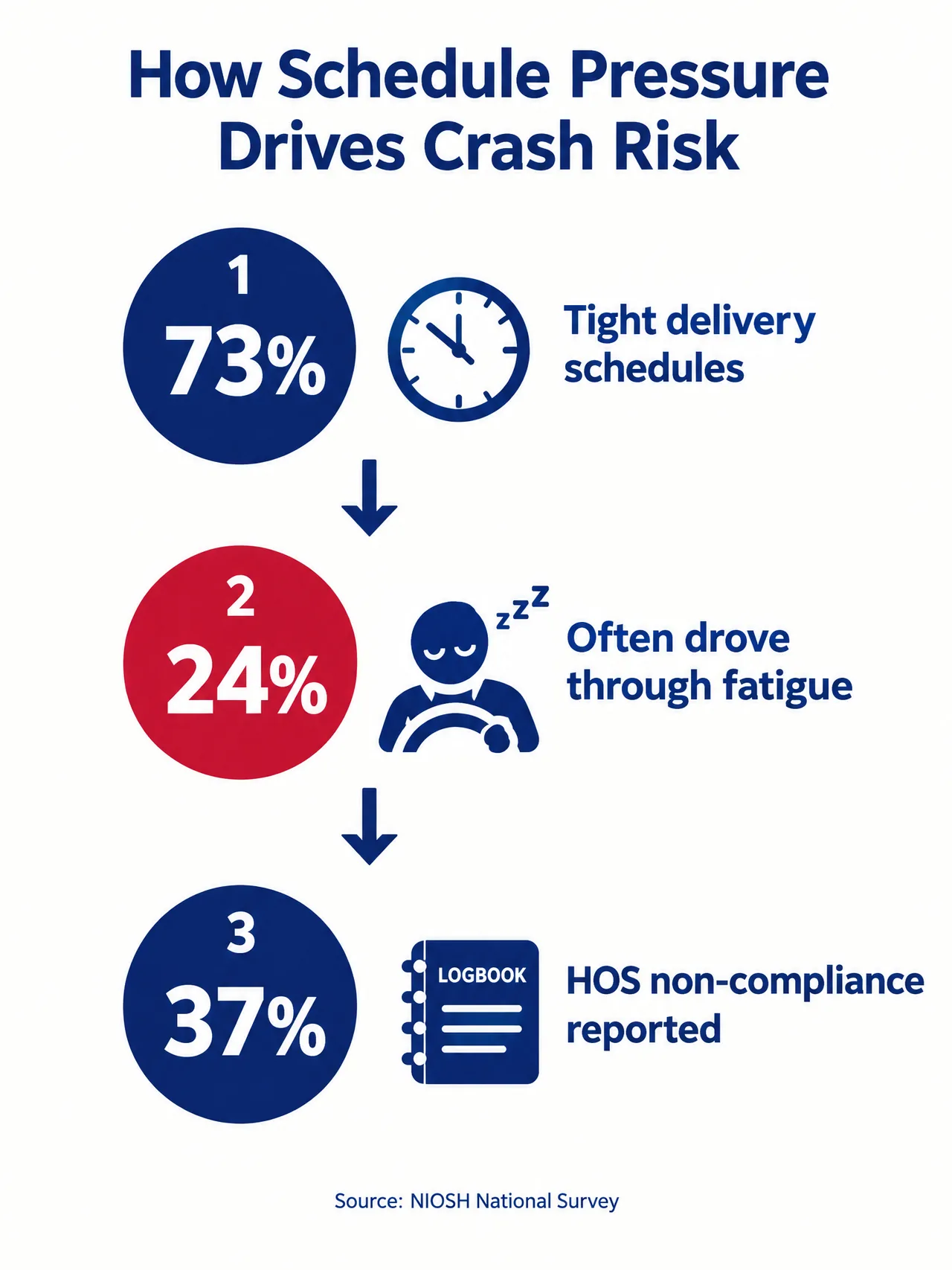
Line up the top findings and you can see the chain. 73% of drivers face unrealistically tight schedules. 24% keep driving despite fatigue to make them. 37% report hours-of-service non-compliance in a year. The schedule comes first, and the driver usually doesn’t set it alone. The carrier, the broker, or the shipper does.
That’s the core argument in a fatigue crash. The driver isn’t some lone bad apple. They’re reacting to pressure the carrier built, pressure the federal government’s own survey documents across the industry.
A driver’s own words, in real time
You don’t need a government report to hear this. It’s all over trucker forums. Here’s a driver on r/Truckers, posted the week this article was researched:
"In an effort to prove myself to this place I started skipping breaks, holding my bladder, driving trucks that don't have working a/c, working my days off, accepting extra work, etc. They push productivity at weekly meetings saying things like we're replaceable and they can outsource drivers. I recently experienced engine derate for the first time… I was asked to attempt to finish the remaining 1hr drive back to the yard."
— Anonymous long-haul driver, r/Truckers, September 2026.
The replies were telling. Other drivers walked the poster through which of those pressures cross into FMCSA coercion under 49 CFR 390.6, which are DOL wage issues, and which leave a paper trail. That’s the same paper trail a plaintiff’s attorney subpoenas after a crash.
Freshness footnote: why a 2010 survey is still the federal baseline
NIOSH published the National Survey of Long-Haul Truck Drivers in 2014, based on 2010 interviews. Fair question: why lean on it? Because it’s still the most recent federal near-miss prevalence estimate for long-haul drivers. Other papers exist; no newer federal one does.
FMCSA’s ongoing Duty Schedules and Crash Risk study, launched in 2024, hasn’t published results. Until it does, the NIOSH numbers stay the government baseline for how common fatigue and near-misses are among long-haul drivers. That’s why articles and expert reports keep citing them.
What this evidence means for a truck accident claim
A survey won’t win a fatigue case by itself. What proves it is records from the specific driver and carrier, backed up by the patterns the survey shows across the industry. In practice, that means preserving and digging into:
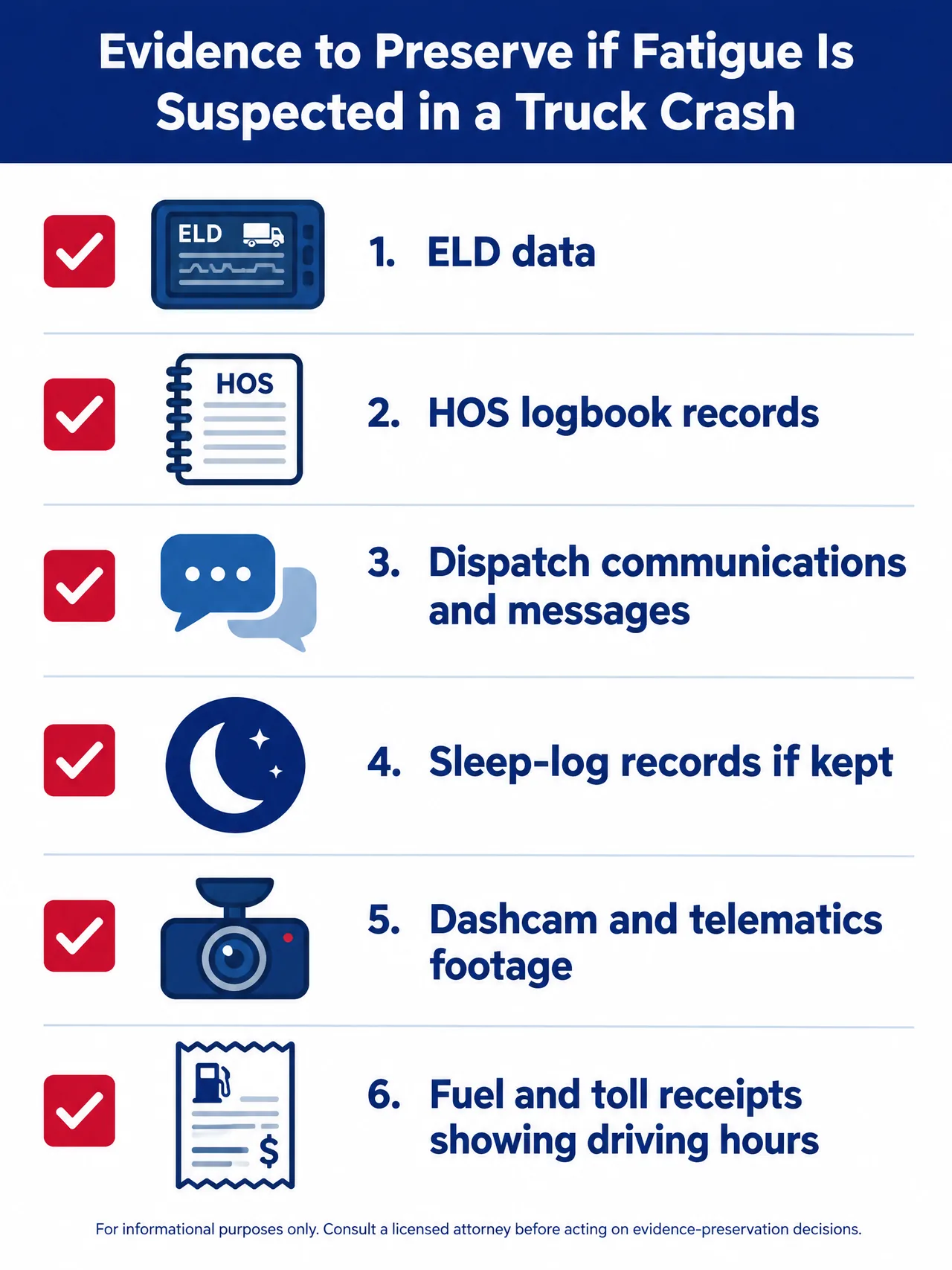
- Electronic logging device (ELD) records for the days leading up to the crash, cross-checked against fuel receipts, tolls, and GPS to expose falsified duty status.
- Dispatch messages to and from the driver. The schedule pressure the NIOSH survey found in 73% of cases usually leaves a written record, on the in-cab unit or the phone.
- The driver qualification file: hiring records, CDL history, medical certification, prior fatigue-related incidents.
- The truck’s engine control module and dash cam data: speed, throttle, and hard-brake events for the seconds before impact.
- Any coercion complaint or driver complaint to FMCSA. 49 CFR 390.6 creates a formal filing path, and complaints are discoverable.
See FMCSA regulations and the evidence that wins truck accident cases for the full evidence walkthrough, and who can be held liable when the carrier’s schedule is upstream of the driver’s fatigue.
How rare a fatigued-driving admission is — and what fills the gap
Almost no driver tells the trooper at the scene, “I was falling asleep.” That’s where the NIOSH numbers earn their keep. They let a plaintiff’s attorney argue base rates: schedule pressure and driving tired are common across the industry, and this driver’s own records from the days before the crash fit the pattern, so fatigue is the most likely explanation. That argument only works if the records still exist.
If a big rig hit you or someone in your family and fatigue may be part of it, move now. Carriers purge records on their own retention schedules, some in as little as six months. Start a free case review now.
Sources
- National Survey of Long-Haul Truck Drivers: Injury and Safety (NIOSH) — CDC / NIOSH
- NIOSH Long-Haul Truck Drivers overview — CDC / NIOSH
- NIOSH Science Bulletin: Truck Driver Health (2015) — CDC / NIOSH
- Sieber et al., Injury and safety findings from the National Survey of Long-Haul Truck Drivers — Am. Journal of Industrial Medicine (2014)
- FMCSA Medical Review Board: National Survey of Long-Haul Truck Driver Health and Injury — FMCSA
- Truck Driver Fatigue Management Survey (Dinges & Maislin, 2006) — FMCSA
Federal regulations and crash statistics are updated periodically. Figures cited on this page reflect the referenced publications at the time of writing; check the source for the current edition.