A truck crash in Nashville is a Tennessee claim: 1 year to file in most cases and modified comparative negligence (50% bar). Big Rig Lawyer connects people hurt here with attorneys licensed in Tennessee; we are a referral service, not a local law office.
Nashville grew faster than its roads, and truck drivers feel it every day. If you were caught in the I-24 crawl and a truck couldn't stop in time, or you were the one driving the truck when a car dove into your lane, the traffic itself is often part of the story.
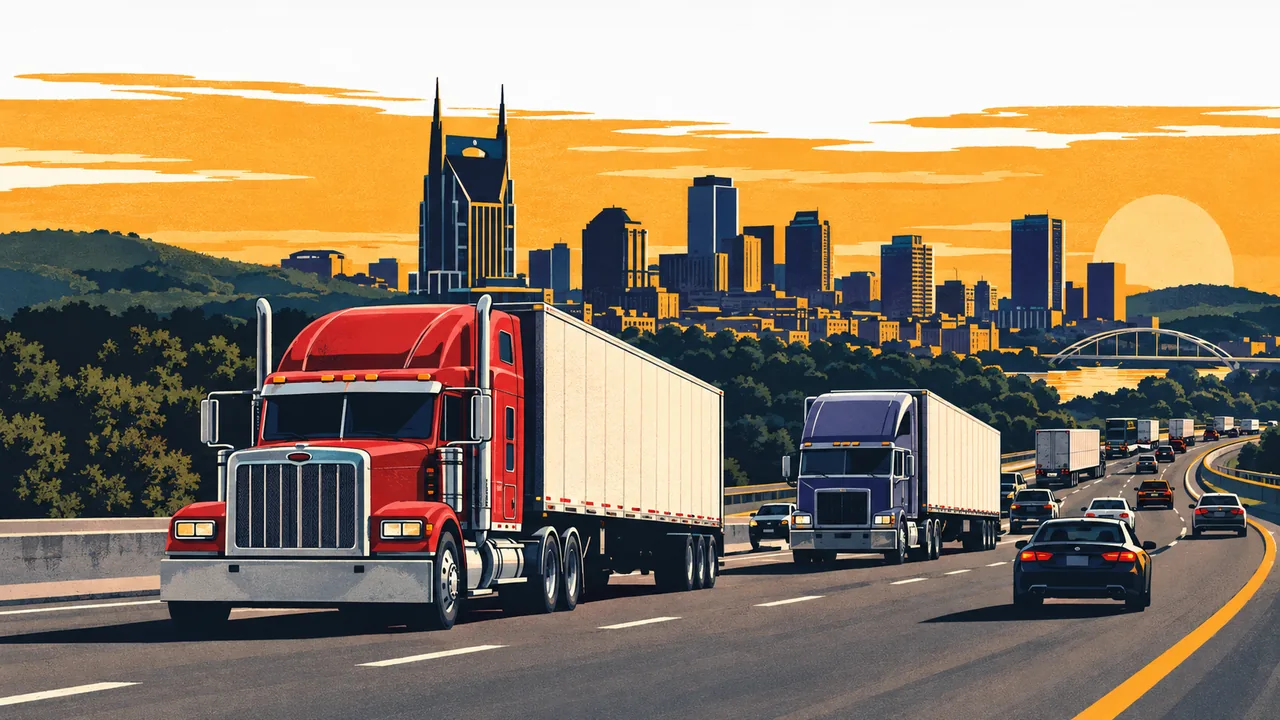
Driving Nashville: what the roads are really like
Rush hour on I-24 toward Murfreesboro can turn a thirty-minute drive into an hour, and the stop-and-go is where rear-end crashes with trucks pile up. The downtown loop is short and crowded, and drivers who don't know it make late lane changes. Weekend nights bring visitors heading to Broadway, some of them not in shape to drive.
Middle Tennessee gets sudden storms in spring and early summer, and the hills around the city can hold fog in the morning. Ice storms in winter are not frequent, but when they come, the region isn't used to them and the roads can shut down fast.
Where big rig wrecks cluster in Nashville
- Downtown inner loop, where I-24, I-40 and I-65 overlap. Three interstates share stretches of road around downtown, so through-trucks, commuters and tourists all fight for the same lanes.
- I-24 between Nashville and Murfreesboro. One of the busiest commutes in the region, with warehouse traffic from La Vergne and Smyrna and frequent stop-and-go.
- I-40 east toward Mt. Juliet and Lebanon. Distribution centers along the road and heavy growth bring trucks and new drivers together.
- I-65 through Brentwood and Cool Springs. Morning and evening commuters pack the lanes as trucks head south toward Alabama.
The freight behind Nashville truck traffic
Three interstates meeting downtown make Nashville a natural distribution point. Warehouses and fulfillment centers line I-24 through La Vergne and Smyrna and I-40 out toward Mt. Juliet and Lebanon. CSX's Radnor Yard sits on the south side of the city. A lot of the truck traffic is regional: loads coming off long-haul trailers and heading back out to stores across the Southeast.
Main truck routes: I-24 · I-40 · I-65 · I-440 · SR 155 (Briley Parkway).
If you were driving the truck
If you run regional routes out of the La Vergne or Mt. Juliet warehouses, you probably make a lot of stops in Nashville traffic. Keep your ELD logs, delivery receipts and any dispatch messages that pushed you to hit a tight window. If you have a dash cam, back up the footage somewhere safe right away. Rear-end crashes in stop-and-go traffic often come down to what the video shows.
If a big rig hit your car
Stop-and-go traffic on I-24 and I-40 is where a lot of cars get rear-ended by trucks that can't stop in time. If that happened to you, get pictures of the truck, the damage to your car and the road. Write down the trucking company name and USDOT number. If you were visiting Nashville, get the crash report number before you go home.
Local moves that protect a Nashville claim
- The Tennessee Highway Patrol usually handles crashes on the interstates outside the city. Inside Davidson County, the Metro Nashville Police Department covers most crashes, including many on the interstates. Surrounding counties have their own sheriffs and city police. Confirm which agency handled yours.
- TDOT's SmartWay traffic cameras cover much of Nashville's interstates. Ask about saving footage early.
- The I-24 SMART corridor between Nashville and Murfreesboro has extra sensors and cameras. Ask a lawyer whether any data from the time of your crash is available.
- Downtown businesses and hotels near the interstate ramps may have cameras pointed toward the road. Ask quickly, before it's recorded over.
Tennessee rules still decide the case
Tennessee bars recovery at 50% fault or more, and reduces the award proportionally below that.
Read the full Tennessee truck accident guide and the Tennessee filing deadlines, or start a free case review.
Other Tennessee metros
Sources
- Large Truck and Bus Crash Facts — Federal Motor Carrier Safety Administration
- SAFER Company Snapshot — carrier safety records — Federal Motor Carrier Safety Administration
Federal regulations and crash statistics are updated periodically. Figures cited on this page reflect the referenced publications at the time of writing; check the source for the current edition.