A truck crash in Memphis is a Tennessee claim: 1 year to file in most cases and modified comparative negligence (50% bar). Big Rig Lawyer connects people hurt here with attorneys licensed in Tennessee; we are a referral service, not a local law office.
You pulled a container out of a rail yard at two in the morning, or you were driving to work on I-240 past the airport. Memphis doesn't sleep, and neither does its truck traffic. A crash here at night can leave you with very few witnesses.
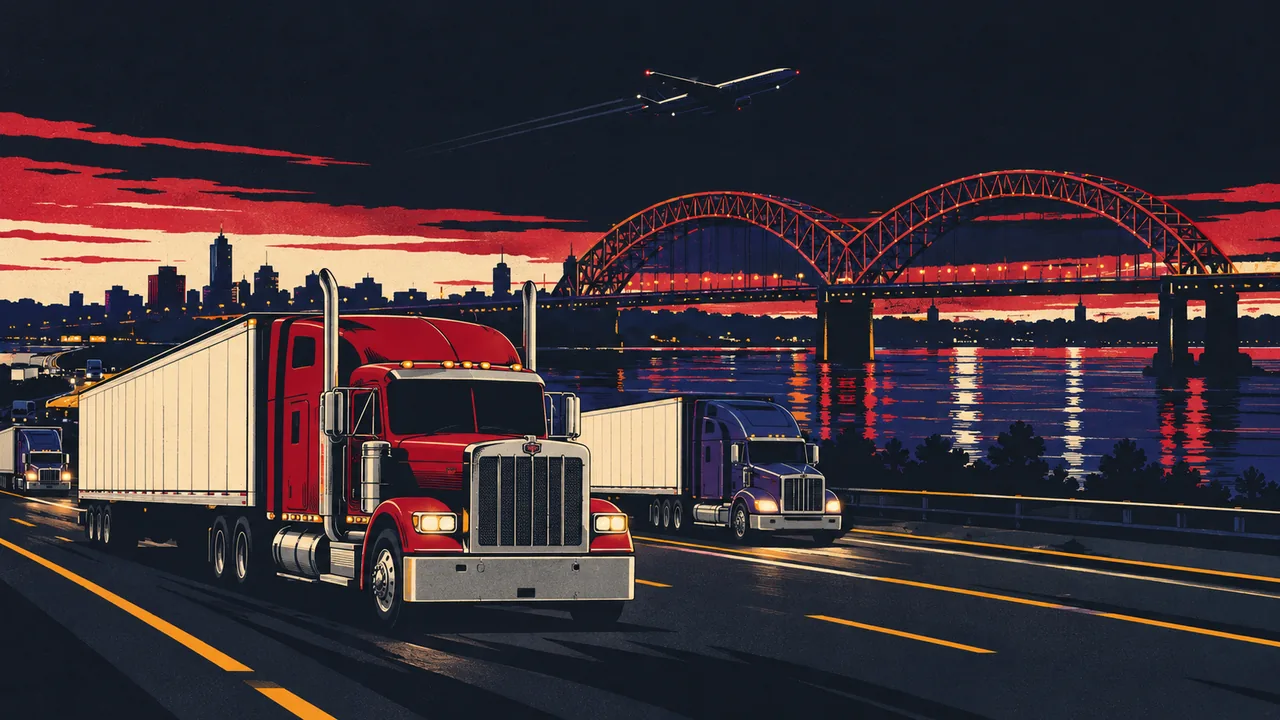
Driving Memphis: what the roads are really like
The FedEx sort runs overnight, and so does a lot of the trucking that feeds it. That means heavy truck traffic at hours when most drivers are tired. The river bridges pinch westbound freight into a few lanes, and any crash on one can back up traffic for miles on both sides.
Memphis summers are hot and muggy, and thunderstorms come up fast. Fog can settle along the river in the mornings. Winter ice storms are less common than up north, but when they hit, the bridges and overpasses freeze first.
Where big rig wrecks cluster in Memphis
- I-40 / I-240 interchange on the east side. Two major freight routes merge, with trucks from the rail yards and FedEx mixing into commuter traffic.
- I-40 Hernando de Soto Bridge and I-55 Memphis-Arkansas Bridge. The only two highway crossings of the Mississippi here, so every truck headed west funnels onto them.
- Lamar Avenue (US-78). A busy truck route with lots of driveways, signals and warehouse entrances.
- I-240 near the airport. Constant truck traffic to and from the FedEx World Hub and airport warehouses.
The freight behind Memphis truck traffic
Memphis is a freight town down to its bones. The FedEx World Hub at Memphis International Airport sorts packages all night. Several Class I railroads, including BNSF and CN, run intermodal yards here, and the Mississippi River brings barge traffic to the Port of Memphis. All of it depends on trucks: drayage between rail yards, shuttles to and from the airport, and long-haul rigs crossing the river on I-40 and I-55.
Main truck routes: I-40 · I-55 · I-240 · I-269 · US-78 (Lamar Avenue).
If you were driving the truck
If you pull containers between the Memphis rail yards, keep the interchange receipts for every chassis and box you handled that day, plus your ELD records and dispatch messages. If the crash happened in a yard, write down where, and who else was working nearby. If a chassis failed, like brakes, lights or tires, photograph it before it goes back into the pool. Those records show who was supposed to maintain the equipment.
If a big rig hit your car
Crossing the river matters here. If you were hit on the Arkansas side of the I-40 or I-55 bridge, or down in DeSoto County, Mississippi, a different state's law may apply and a different agency may have the report. Write down exactly where you were, and check with an attorney about which state's rules fit your case. Get the truck's company name and USDOT number either way.
Local moves that protect a Memphis claim
- The Tennessee Highway Patrol usually handles crashes on the interstates. Inside Memphis, it's usually Memphis police; in unincorporated Shelby County, the Shelby County Sheriff's Office. Suburbs like Germantown, Collierville and Bartlett have their own police. Confirm with the officer at the scene.
- TDOT runs traffic cameras on the Memphis interstates. Ask about stored footage quickly.
- Rail yard gates log every truck in and out. If the truck was coming from a yard, those records can show when it left and what it carried.
- If you crashed near the state line, note the nearest exit, mile marker or landmark so the right state and agency can be identified.
Tennessee rules still decide the case
Tennessee bars recovery at 50% fault or more, and reduces the award proportionally below that.
Read the full Tennessee truck accident guide and the Tennessee filing deadlines, or start a free case review.
Other Tennessee metros
Sources
- Large Truck and Bus Crash Facts — Federal Motor Carrier Safety Administration
- SAFER Company Snapshot — carrier safety records — Federal Motor Carrier Safety Administration
Federal regulations and crash statistics are updated periodically. Figures cited on this page reflect the referenced publications at the time of writing; check the source for the current edition.