A truck crash in Pittsburgh is a Pennsylvania claim: 2 years to file in most cases and modified comparative negligence (51% bar). Big Rig Lawyer connects people hurt here with attorneys licensed in Pennsylvania; we are a referral service, not a local law office.
Loaded trucks come down Greentree Hill every day with their brakes working hard and a tunnel waiting at the bottom. When one of them can't stop in time, the car in front takes the hit. Here's what's worth knowing about truck crashes around Pittsburgh.
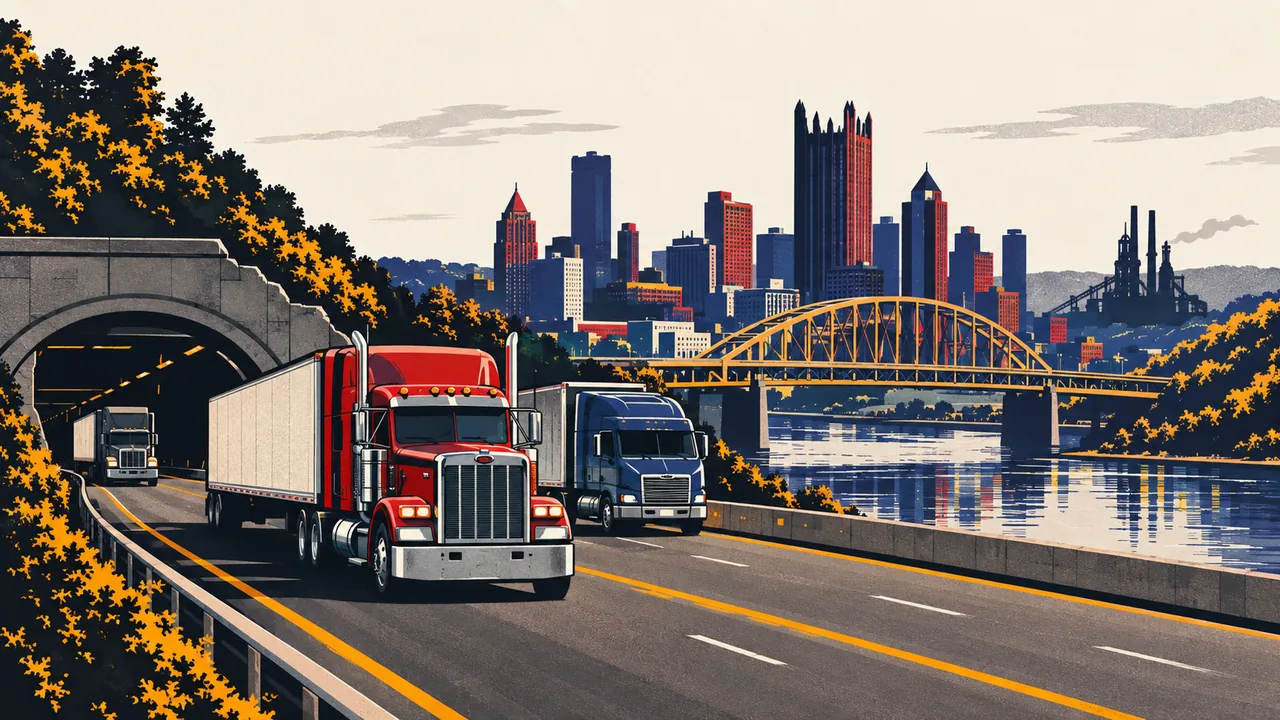
Driving Pittsburgh: what the roads are really like
Pittsburgh's roads are shaped by hills and rivers. The Parkway runs through tunnels and across bridges with almost no shoulder, grades are steep enough to cook a set of brakes, and many ramps show up with barely any warning. Some tunnels restrict hazardous-material loads, so tankers and hazmat haulers get routed onto surface streets and other bridges.
Winter adds freezing rain and black ice on bridges that freeze before the ground does. Outside the city, rural two-lane roads in the gas fields carry heavy tankers and work trucks on tight curves, often driven by crews working long days. Rush-hour backups at the tunnels are daily and predictable, and many crashes happen at the tail of those backups.
Where big rig wrecks cluster in Pittsburgh
- Fort Pitt Tunnel and Bridge on the Parkway West (I-376). Traffic exits the tunnel straight onto a bridge and has to pick a lane for several exits within seconds. Trucks and cars cross paths fast.
- Squirrel Hill Tunnel on the Parkway East (I-376). Traffic squeezes into two narrow tubes and constantly stops and starts, which sets up rear-end hits at the entrances.
- Greentree Hill on the Parkway West. A long, steep grade inbound toward the tunnel where loaded trucks have to control their speed going down.
- I-79 and I-70 near Washington. Two interstates share lanes through hilly country, with gas-field trucks mixed into through-traffic.
The freight behind Pittsburgh truck traffic
Pittsburgh's steel mills never fully went away. U.S. Steel's Mon Valley plants still run up and down the Monongahela, and their coil and coke move by truck, rail and barge. The rivers carry coal and other bulk cargo through a network of barge terminals. South and west of the city, the Marcellus shale gas fields in Washington and nearby counties put tankers, water trucks and equipment haulers on roads that weren't built for them. Distribution centers cluster near the airport and along I-79.
Main truck routes: I-376 (Parkway East and West) · I-79 · I-279 · I-76 (Pennsylvania Turnpike) · I-70.
If you were driving the truck
Mountain-grade driving is its own skill, and after a wreck on a Pittsburgh hill, somebody will ask whether you used the right gear or rode your brakes. Keep your pre-trip inspection records and any brake-adjustment or maintenance paperwork for the truck. Save your ELD data. If a brake failure was part of it, don't let the truck get repaired before someone looks at it. If you haul in the gas fields, write down the well pad or site you were headed to and who dispatched you.
If a big rig hit your car
A truck crash in a Pittsburgh tunnel or on a bridge usually shuts the road down, and the towing gets done fast to reopen it. Before you're moved, if you can, take photos of the truck, its company name and USDOT number. Find out which department wrote the report, because in Allegheny County it may be one of dozens of small local forces or the state police. Keep every medical record, even if your injuries seem minor at first.
Local moves that protect a Pittsburgh claim
- Pittsburgh police handle crashes inside the city, but Allegheny County is split into well over a hundred municipalities, many with their own police, so the agency can change within a mile. The Pennsylvania State Police often handle the interstates and the Turnpike and cover towns without their own force. Ask at the scene who is writing it and confirm by calling that agency.
- PennDOT operates cameras around the tunnels and bridges. Ask a lawyer about requesting footage before it's overwritten.
- If a truck's brakes were involved, the physical brakes themselves are evidence. An attorney can ask that the truck be preserved before repairs.
- In the gas fields, the truck may be working for a subcontractor of a subcontractor. Write down every name on the truck and any site signs where it came from.
Pennsylvania rules still decide the case
Pennsylvania reduces recovery by your percentage of fault and bars it above 50%.
Read the full Pennsylvania truck accident guide and the Pennsylvania filing deadlines, or start a free case review.
Other Pennsylvania metros
Sources
- Large Truck and Bus Crash Facts — Federal Motor Carrier Safety Administration
- SAFER Company Snapshot — carrier safety records — Federal Motor Carrier Safety Administration
Federal regulations and crash statistics are updated periodically. Figures cited on this page reflect the referenced publications at the time of writing; check the source for the current edition.