A truck crash in Kansas City is a Missouri claim: 5 years to file in most cases and pure comparative negligence. Big Rig Lawyer connects people hurt here with attorneys licensed in Missouri; we are a referral service, not a local law office.
In Kansas City, the state line runs right through the middle of town, and plenty of truckers cross it a dozen times a shift. So the first question after a crash is simple but important: which side of State Line Road were you on?
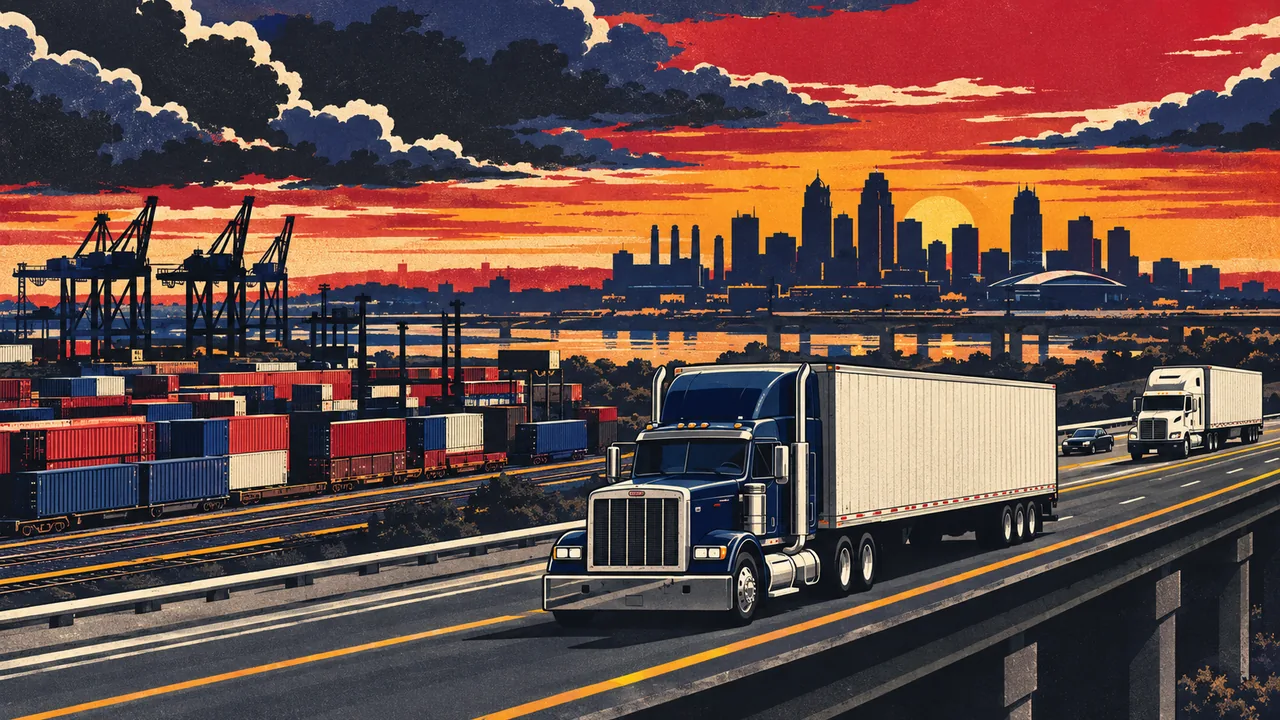
Driving Kansas City: what the roads are really like
The downtown loop is old and tight, and the interstates that meet there carry heavy truck traffic from every direction. I-435 circles the whole metro and crosses the state line twice. Game days at the sports complex jam I-70 and I-435 on the east side.
Winter brings ice storms and snow, and wind across the open plains can push trailers around. Spring brings severe storms and sometimes tornado warnings. In summer, heat can buckle pavement and blow out tires.
Where big rig wrecks cluster in Kansas City
- Downtown loop where I-70, I-35 and I-670 meet. A tight, old loop with short merges and left exits that trap unfamiliar drivers.
- I-435 at I-70 on the east side. Two busy freight routes meet near the sports complex, with heavy truck and game-day traffic.
- I-35 through Johnson County, Kansas. Trucks heading to and from Logistics Park Kansas City in Edgerton share the road with suburban commuters.
- I-29 toward Kansas City International Airport. Airport and warehouse traffic mix with trucks heading north.
The freight behind Kansas City truck traffic
Kansas City is one of the country's biggest rail hubs, and trucks keep the boxes moving. BNSF's Logistics Park Kansas City sits in Edgerton, Kansas, off I-35, with warehouses around it. BNSF's Argentine Yard sits in Kansas City, Kansas, and several other railroads operate yards in the metro. Distribution centers spread out along I-35, I-70 and I-435 on both sides of the state line.
Main truck routes: I-70 · I-35 · I-29 · I-435 · I-635.
If you were driving the truck
If you pull containers out of Logistics Park KC or the Argentine Yard, keep your interchange receipts, ELD records and dispatch messages. Note exactly where the crash happened, including which state. If a chassis failed, photograph it before it goes back into the pool. Kansas City drayage drivers often cross the state line many times a day, so the location details really matter.
If a big rig hit your car
This page covers Missouri, but a crash on the Kansas side, in Johnson or Wyandotte County, is governed by Kansas law, not Missouri's. The rules can be different. Write down exactly where you were hit and confirm with an attorney which state's law applies. Get the crash report from whichever agency responded, on either side of the line.
Local moves that protect a Kansas City claim
- On the Missouri side, the Missouri State Highway Patrol usually handles interstate crashes, and Kansas City police often respond inside city limits. On the Kansas side, it's usually the Kansas Highway Patrol or local police like Overland Park or Olathe. County sheriffs cover unincorporated areas. Confirm which agency handled yours.
- Write down the exact location, like the nearest exit, mile marker or cross street, so it's clear which state the crash was in.
- KC Scout, the regional traffic system, runs cameras on many metro freeways. Ask about stored footage early.
- Rail yard and intermodal gates log every truck in and out. If the truck came from a yard, those records can show when it left.
Missouri rules still decide the case
Missouri is a pure comparative fault state. Your recovery is reduced by your percentage of fault, but no percentage bars recovery outright.
Read the full Missouri truck accident guide and the Missouri filing deadlines, or start a free case review.
Other Missouri metros
Sources
- Large Truck and Bus Crash Facts — Federal Motor Carrier Safety Administration
- SAFER Company Snapshot — carrier safety records — Federal Motor Carrier Safety Administration
Federal regulations and crash statistics are updated periodically. Figures cited on this page reflect the referenced publications at the time of writing; check the source for the current edition.