A truck crash in Jacksonville is a Florida claim: 2 years to file in most cases and modified comparative negligence (51% bar). Big Rig Lawyer connects people hurt here with attorneys licensed in Florida; we are a referral service, not a local law office.
Jacksonville is where I-95 and I-10 meet, with port terminals, rail yards and warehouses all around. If a truck hit you here, or you got hurt hauling out of JAXPORT, the case could involve a port hauler, a long-haul carrier or a warehouse fleet.
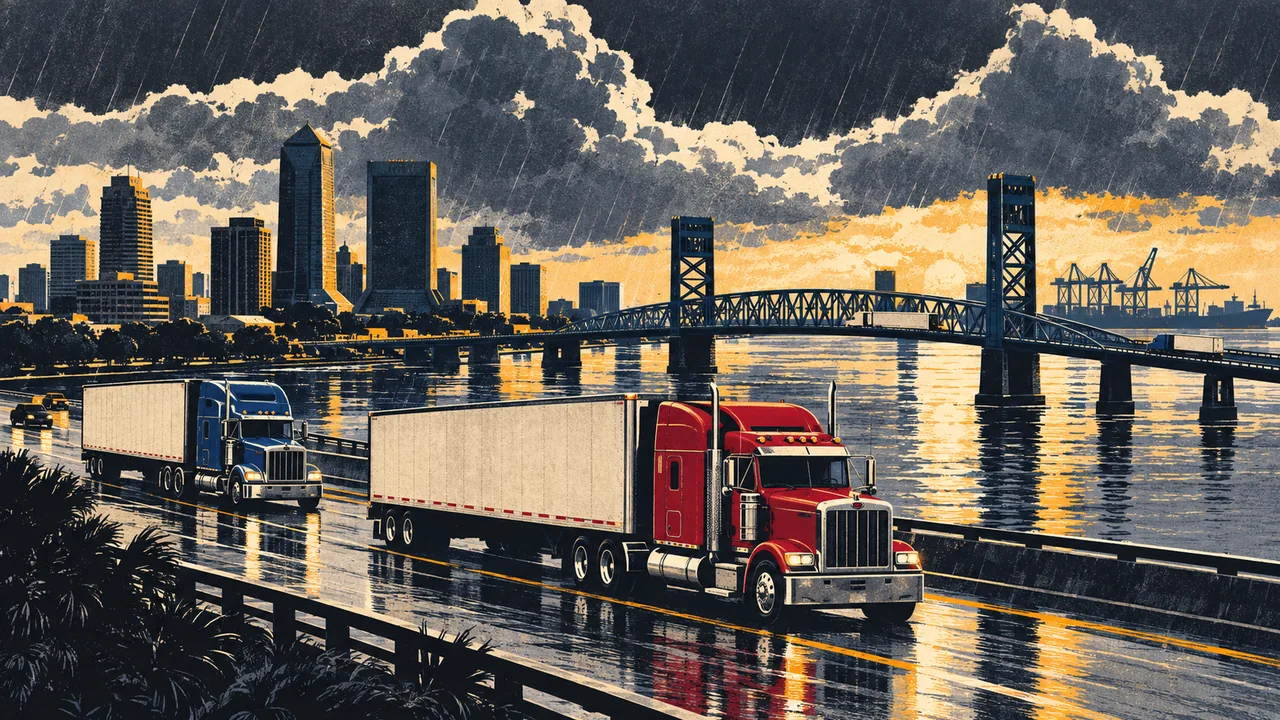
Driving Jacksonville: what the roads are really like
Jacksonville is huge by area, so trucks cover a lot of ground. I-95 carries heavy traffic through town, and the interchanges near downtown and the river can back up. I-295 loops around the city, carrying port and warehouse traffic.
Florida weather plays a big part. Summer thunderstorms hit almost daily, with heavy rain that makes roads slick and cuts visibility. Hurricane season can bring evacuations and flooding. Morning fog is common near the river.
Where big rig wrecks cluster in Jacksonville
- I-95 / I-10 interchange near downtown. Two interstates meet near the St. Johns River with heavy merging.
- I-295 / I-95 on the north side. Airport, port and warehouse traffic converge.
- I-10 west toward Baldwin. Growing warehouse and industrial parks add truck traffic.
- SR-9A near Blount Island and Dames Point. Port trucks enter and leave the terminals.
The freight behind Jacksonville truck traffic
JAXPORT runs terminals at Blount Island, Dames Point and Talleyrand, handling containers, vehicles and bulk cargo. Jacksonville is also a major rail hub, and CSX is headquartered here. I-95 carries East Coast freight through town, and I-10 starts here and runs west. Warehouses on the west and north sides handle a lot of that freight.
Main truck routes: I-95 · I-10 · I-295 · SR-9A · US-1.
If you were driving the truck
If you got hurt driving out of JAXPORT or a Jacksonville warehouse, keep your gate tickets, container numbers, lease paperwork and ELD records. Note which terminal or warehouse you were coming from and going to. If you're a long-haul driver passing through on I-95 or I-10, keep your trip records. An attorney can use it all to figure out who was responsible.
If a big rig hit your car
If a truck hit your car in Jacksonville, photograph the truck, the trailer, any container numbers and the company markings. Write down which road, which direction and the nearest exit. Get the report number and the names of witnesses. Afternoon storms here can make a crash scene hard to document, so if you couldn't get photos, write down what you saw as soon as you can. Keep every medical bill.
Local moves that protect a Jacksonville claim
- Jacksonville and Duval County share a consolidated government, so the Jacksonville Sheriff's Office usually handles crashes inside Duval County. The Florida Highway Patrol often handles crashes on interstates. In neighboring counties like Clay or St. Johns, the county sheriff or city police may respond. Ask the officer and get the report number.
- FDOT has traffic cameras on Jacksonville interstates; ask an attorney about requesting footage early.
- Container numbers can connect the truck to a JAXPORT terminal and shipping line.
- If the crash happened in heavy rain, note the time; weather records can back up your account.
Florida rules still decide the case
Florida changed in 2023. A claimant found more than 50% at fault is now barred from recovering, where previously Florida was a pure comparative state with no bar at all.
Read the full Florida truck accident guide and the Florida filing deadlines, or start a free case review.
Other Florida metros
Sources
- Large Truck and Bus Crash Facts — Federal Motor Carrier Safety Administration
- SAFER Company Snapshot — carrier safety records — Federal Motor Carrier Safety Administration
Federal regulations and crash statistics are updated periodically. Figures cited on this page reflect the referenced publications at the time of writing; check the source for the current edition.