A truck crash in Phoenix is a Arizona claim: 2 years to file in most cases and pure comparative negligence. Big Rig Lawyer connects people hurt here with attorneys licensed in Arizona; we are a referral service, not a local law office.
Phoenix truck crashes have a pattern: heat that wrecks tires, dust that comes out of nowhere, and a freeway system full of trucks heading to warehouses in the West Valley. If one of them hit you, or you were driving when it happened, the conditions that day matter.
Driving Phoenix: what the roads are really like
Phoenix freeways are wide and fast, but they're busy, especially around the Stack and through downtown. The loop freeways carry a lot of warehouse traffic now. South toward Tucson, I-10 has long stretches of construction where lanes narrow and speeds vary.
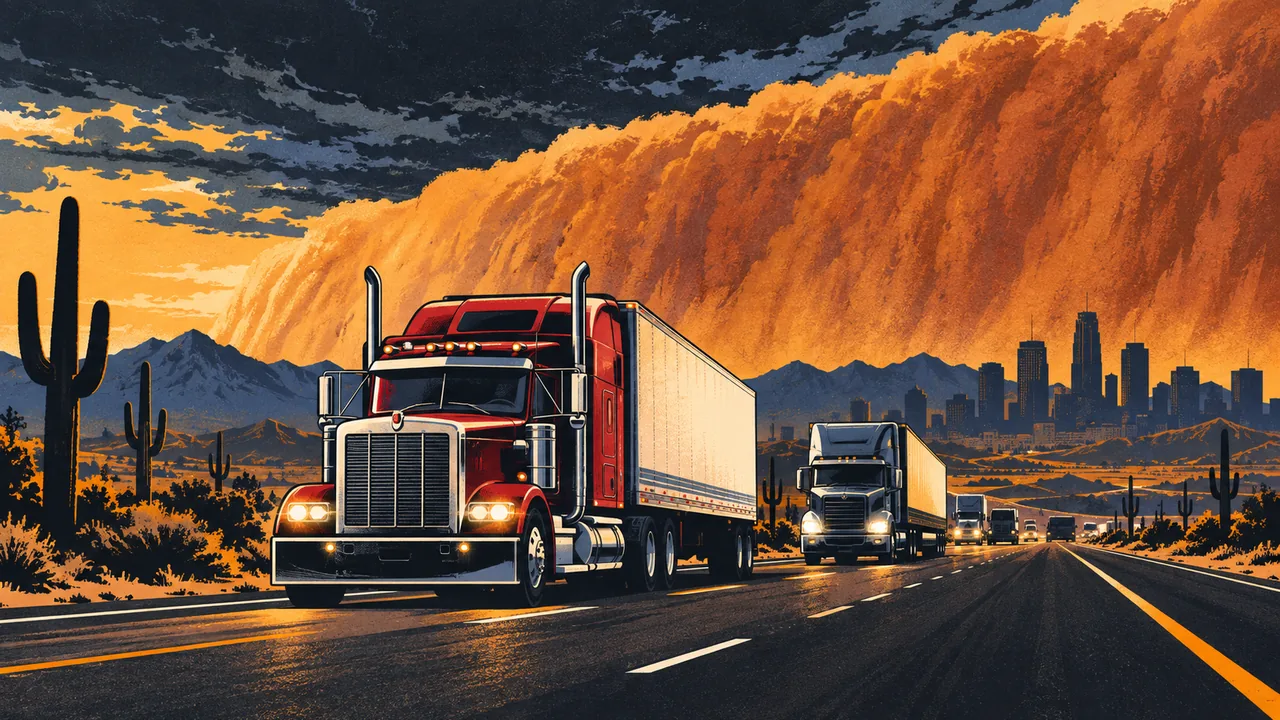
Summer heat regularly goes past 110 degrees, and tire blowouts are common. Monsoon storms from roughly June to September bring haboobs, walls of dust that can drop visibility to nearly nothing, followed by heavy rain that makes roads slick. Crashes during a dust storm can involve many vehicles at once.
Where big rig wrecks cluster in Phoenix
- The Stack (I-10 / I-17 west of downtown). A tall interchange where two interstates meet and trucks change routes in heavy traffic.
- I-10 between Phoenix and Casa Grande. The main truck route to Tucson, with long stretches of construction and fast traffic.
- Loop 303 and I-10 in the West Valley. Rapid warehouse growth has flooded these roads with trucks.
- I-17 north toward Flagstaff. Steep grades and sudden slowdowns as trucks climb out of the valley.
The freight behind Phoenix truck traffic
Phoenix sits on I-10 between Southern California and Texas, so a lot of truck traffic is passing through. The West Valley, around Goodyear, Tolleson and along Loop 303, has become a major warehouse area serving the Southwest. Trucks also run south to Tucson and Nogales for Mexico trade, and north on I-17 toward Flagstaff and I-40.
Main truck routes: I-10 · I-17 · Loop 202 · Loop 101 · Loop 303.
If you were driving the truck
If you got hurt driving in the Phoenix area, save your ELD logs, your maintenance and tire records if you have access, and any paperwork for the load. If a dust storm or monsoon played a part, write down when you first saw it and what you did. If you were headed to a West Valley warehouse, note the facility name. An attorney can use all of that to figure out who might be responsible.
If a big rig hit your car
If a truck hit your car in Phoenix, photograph the truck, the trailer, the tires if a blowout was involved, and any debris on the road. Note the weather, especially dust or rain. Get the report number from the officer. Save your ER paperwork and every bill that follows. The carrier's insurer may call quickly and sound friendly; it's fine to hold off on answering questions until you've had advice.
Local moves that protect a Phoenix claim
- The Arizona Department of Public Safety usually handles crashes on state highways and freeways, including the loop freeways. On city streets, local police like Phoenix, Mesa or Glendale police often respond. In unincorporated areas, the Maricopa County Sheriff's Office may handle it. On tribal land along I-10 south of Phoenix, tribal police may be involved. Confirm at the scene.
- Photograph tire debris on the road if a blowout was involved; it can show whether the tire was worn.
- ADOT has freeway cameras and posts dust storm warnings; your attorney may look at both.
- If the crash happened on I-10 through tribal land, ask which agency took the report.
Arizona rules still decide the case
Arizona is a pure comparative state — recovery is reduced by your share of fault but is not barred at any threshold.
Read the full Arizona truck accident guide and the Arizona filing deadlines, or start a free case review.
Sources
- Large Truck and Bus Crash Facts — Federal Motor Carrier Safety Administration
- SAFER Company Snapshot — carrier safety records — Federal Motor Carrier Safety Administration
Federal regulations and crash statistics are updated periodically. Figures cited on this page reflect the referenced publications at the time of writing; check the source for the current edition.